

For triathletes who are serious about hydration
Stop Doing a Once-Off Sweat Test and Start Actually Understanding Your Sweat
One data point from one session on one day tells you almost nothing. Here's a better way to dial in your hydration needs across every condition you train and race in.
Get My Discount CodeBefore we go any further - have you listened to this?
If you're not sure whether sweat testing is even relevant for you, start here. Episode 15 of the Triathlon Nutrition Academy Podcast breaks down exactly what sweat testing is, what the different methods can (and can't) tell you, and who actually needs it.
You already know dehydration is a performance killer
As little as 2% of body weight lost to fluid deficit can have a measurable impact on your output. Cramping in the back end of a run. Fading on a long ride. That hollow, flat feeling that has nothing to do with your fitness.
You've probably also heard that sweat rate and sweat sodium vary enormously between athletes. What works for your training partner is not your data. So you want to actually test it.
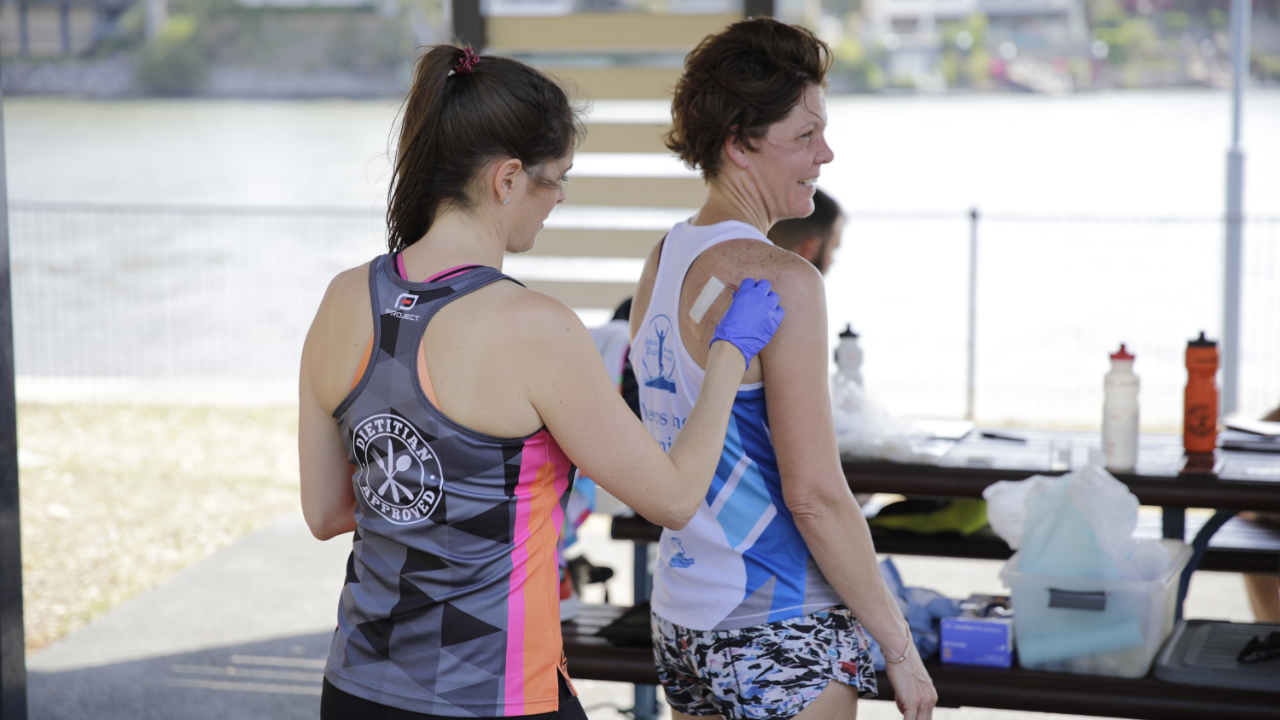
Here's the problem: Most athletes do one sweat test, get one number, and think they've cracked the code.
They haven't.
Your sweat rate is not a fixed value. It changes with intensity, with temperature, with humidity, with the sport you're doing. The sweat sodium number from your 45-minute treadmill run in an air-conditioned lab tells you very little about what's happening during your four-hour long ride in the Queensland summer heat. (Or your Ironman in Cairns. Or your race in Kona.)
One data point is not a hydration strategy. It's a starting point at best.
What's wrong with most sweat testing options
There are a lot of sweat testing methods floating around out there. Sedentary patches you stick on at rest. DIY kits you run yourself at home. Once-off sessions at a lab or clinic. These will all give you a number.
The issue is that a single number from a single session is enormously limited. Your sweat rate on a cool autumn morning is not your sweat rate at Challenge Roth in 35-degree heat. Your electrolyte losses on an easy Z2 ride are not your losses at race pace. One test, one day, one set of conditions. That's the ceiling.
What you actually need is data across multiple sessions, multiple intensities, multiple conditions and multiple sports. And you need to be able to collect that data yourself, in the real conditions you train and race in.
That's exactly what wearable sweat testing is built for.
Introducing HDrop: wearable, reusable sweat testing you can use anywhere
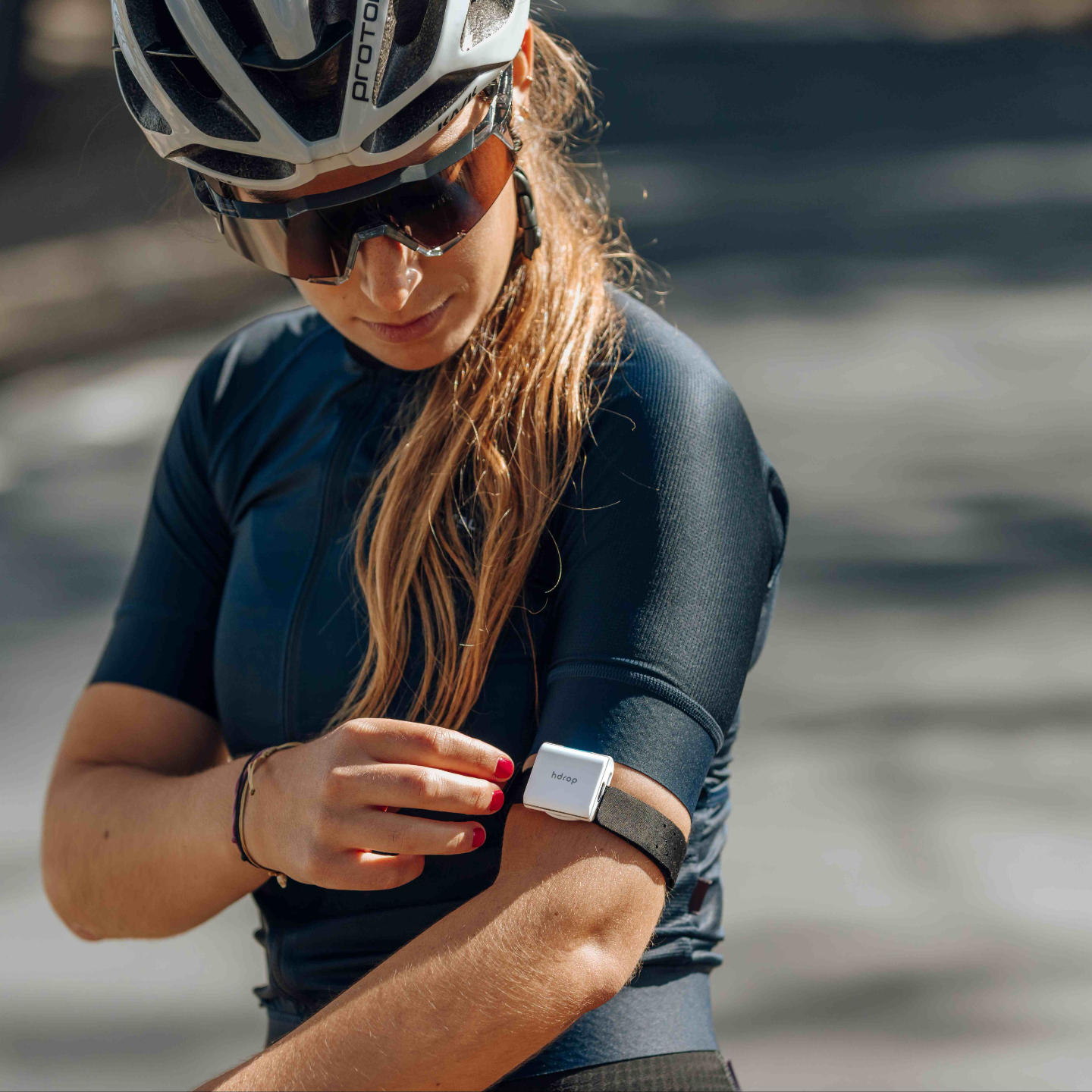
HDrop is a wearable sweat sensor that lets you accurately measure your sweat rate and sweat sodium concentration during your actual training and racing.
Not in a lab. Not in a controlled environment. On your bike, on your run, in summer, in winter, indoors, outdoors. Wherever and however you train.
Because HDrop is reusable, you can test repeatedly over time. That means you build a real picture of your personal hydration story across different conditions. You start to see patterns. You understand how your sweat changes with heat. You know what your sodium losses look like on a long ride versus a hard run session. That's the kind of data that builds a genuinely personalised hydration strategy.
What the data actually looks like
Independent, peer-reviewed validation studies are currently going through publication (expected mid-2026). The preliminary data:
92%
sweat rate accuracy vs pre/post body weight method
87%
sweat sodium accuracy vs gold standard patch method
This is not a DIY kit that gives you a vague estimate. HDrop gives you real numbers you can use to build your hydration plan.
Why multiple tests beats one test, every time
With HDrop, you can test:
Across seasons
Your summer sweat rate is not your winter sweat rate. Now you can actually quantify the difference and adjust your hydration strategy accordingly.
Across intensities
Easy aerobic sessions versus race-pace efforts produce very different sweat data. Testing both gives you a complete picture.
Across sports
Your sweat sodium on the bike is not necessarily what it is on the run. If you're doing triathlon, this matters.
Over time
As your fitness improves, your acclimatisation changes and your training load shifts, your sweat profile shifts too. A single test becomes outdated. Ongoing testing stays current.
Why I recommend HDrop
Taryn Richardson
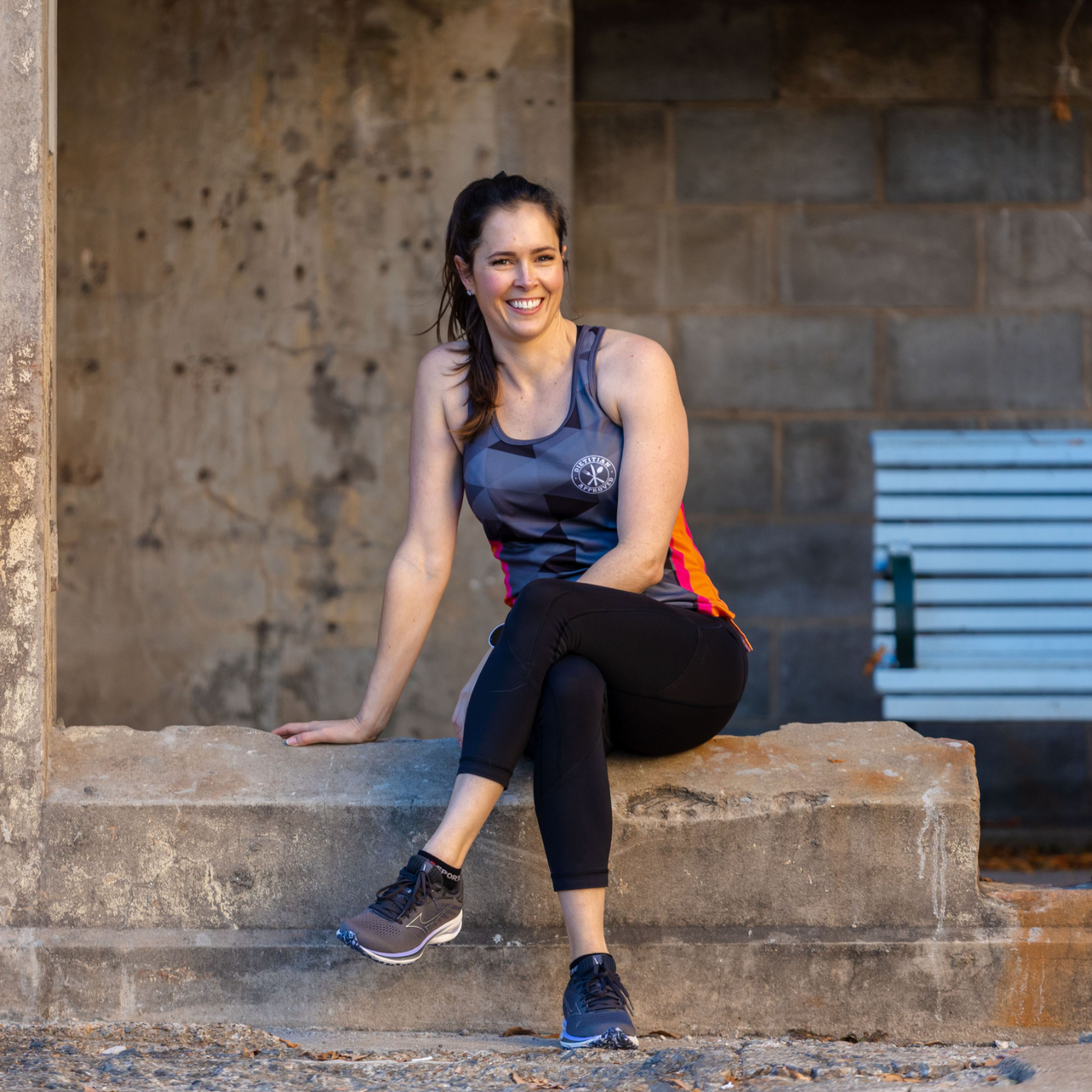
I'm Taryn Richardson, Advanced Sports Dietitian and founder of the Triathlon Nutrition Academy. I spent six years as a Sports Dietitian consultant to Triathlon Australia, working with our elite and paratriathletes. Hydration is one of the areas I care deeply about, which means I have very little patience for testing methods that produce inaccurate or misleading data.
HDrop is the sweat testing device I personally use and recommend to my athletes. Not because it's the flashiest option, but because the accuracy data supports it and because reusable, repeated testing in real training conditions is simply a better way to understand your hydration needs than a once-off lab test.
I don't recommend products I don't believe in. (Ask anyone who's heard my thoughts on certain popular electrolyte drinks.)
We've organised a discount code for the Dietitian Approved community. Submit your details below and I'll send it straight to you.
Get Your HDrop Discount Code
Submit your details below and I'll send you the discount code for HDrop directly. No pressure, no hard sell. Just the code, so you can explore it at your own pace.
Your hydration needs are not someone else's hydration needs. One session, one number, one set of conditions is not enough to build a strategy that holds up across a full season of training and racing. Repeated, real-world testing is. Get the code, try the device and start building actual data.