How to Lose Weight Without Losing Power: Strategic Fat Loss for Triathletes
Feb 27, 2026
If you’re a triathlete trying to lose weight but your FTP keeps tanking, we need to talk.
You want to lean up. You want to feel lighter on the run and more aero on the bike. But every time you “eat less”, your watts drop, your legs feel flat and your threshold sessions turn into survival mode.
Sound familiar?
In this article, I’ll show you:
-
Why cutting carbs is sabotaging your triathlon performance
-
How to lose body fat without losing muscle
-
What carbohydrate periodisation actually looks like in a training week
-
How to create a calorie deficit without wrecking your recovery
-
A real athlete case study of sustainable fat loss with improved FTP
Because you don’t get faster by shrinking yourself.
You get faster by building a powerful engine and fuelling it properly.
Why Most Triathletes Lose Power When They Try to Lose Weight
The biggest mistake I see age group triathletes make when trying to lose weight is this:
They slash calories.
They slash carbs.
They try to train just as hard.
It’s a recipe for underperformance.
You cannot ask your body to:
-
Hit threshold power on the bike
-
Run strong off the bike in a brick
-
Hold pace in the pool
-
Recover well between sessions
…while simultaneously underfuelling it.

Your body cannot perform well when it’s in a hole.
When you create a large calorie deficit across your entire training week, your power output drops. And when your power drops, your training stimulus drops. Which means you burn less energy anyway.
That’s not fat loss. That’s just spinning your wheels.
Can You Lose Body Fat and Maintain Power?
Yes. Absolutely.
But only when your nutrition is strategic.
Fat loss and performance can coexist when:
-
Energy intake is periodised across the week
-
Carbohydrates are timed around key sessions
-
Protein intake protects muscle mass
-
The calorie deficit is small and sustainable
That’s performance nutrition. Not dieting.
When you diet, you just shrink yourself.
When you fuel strategically, you support performance while gradually improving body composition.
There’s a big difference.
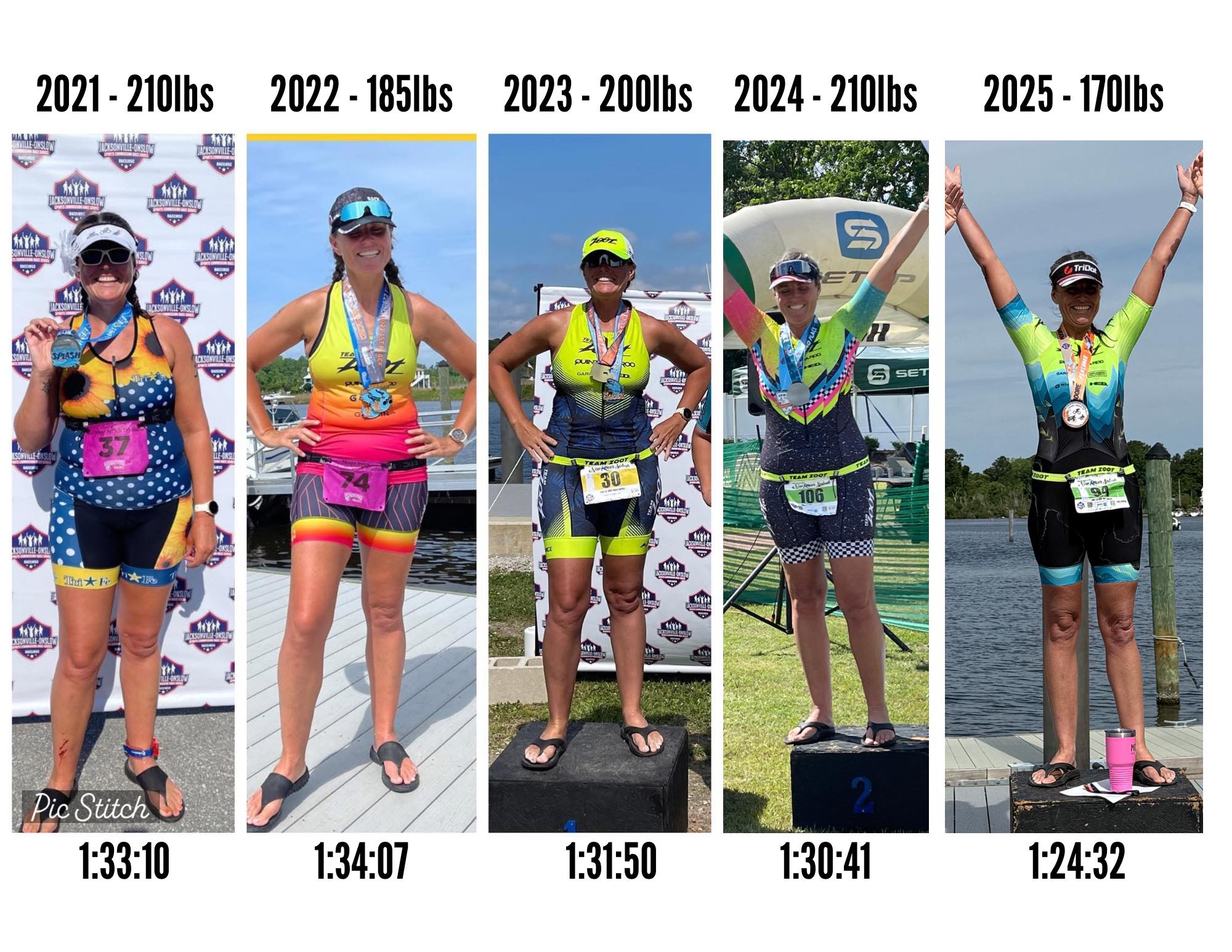
Real World Example: 45 Pounds Down, FTP Up
Inside the Triathlon Nutrition Academy, I worked with a masters triathlete, Erin, who had a long history of yo-yo dieting.
She openly admitted she was using triathlon to manage her body composition.
Over 12 months, she lost 45 pounds, around 20 kilos. But here’s the kicker:
-
She lost body fat, not muscle
-
Her FTP improved
-
She kept the weight off long term
It wasn’t because she cut carbs.
It wasn’t because she did extra cardio.
It wasn’t because she crash dieted.
It was because she:
-
Fuelled key sessions properly
-
Periodised her carbohydrate intake
-
Hit her protein targets
-
Created a small, sustainable deficit
-
Focused on consistent daily habits
No white knuckling hunger.
No six week shred.
No rebound.
That’s the difference between dieting and strategic triathlon nutrition.
What Strategic Fat Loss Looks Like for Triathletes
It’s not sexy. But it works.
1. Fuel the Sessions That Matter
This is non-negotiable.
If you have:
-
Threshold work
-
VO2 sessions
-
Long rides
-
Long runs
-
Brick sessions
-
Races
You need to:
-
Eat before
-
Fuel during
-
Recover properly after
Trying to create a massive calorie deficit in your hardest sessions is counterproductive. That’s where performance is built.
If your power drops, your stimulus drops. And that’s not helpful for long term fat loss or performance.
If you’re unsure what fuelling before, during and after training should look like, start with the Triathlon Nutrition Kickstart course
-
Periodise Your Carbohydrates Instead of Eliminating Them
Carbs are not the devil.
Carbohydrates do not make you fat in isolation.
Poorly timed carbs and excessive intake relative to your training load are usually the problem.
On higher load days, you need more.
On lighter days or rest days, you can pull things back slightly.
That’s where your strategic deficit can come from.
Not from slashing carbs across the board and hoping for the best.
-
Protect Your Muscle Mass
If you lose muscle:
-
Your metabolic rate drops
-
Your power drops
And neither of those are helpful.
To protect muscle while losing body fat:
-
Meet your daily protein requirements
-
Spread protein evenly across meals
-
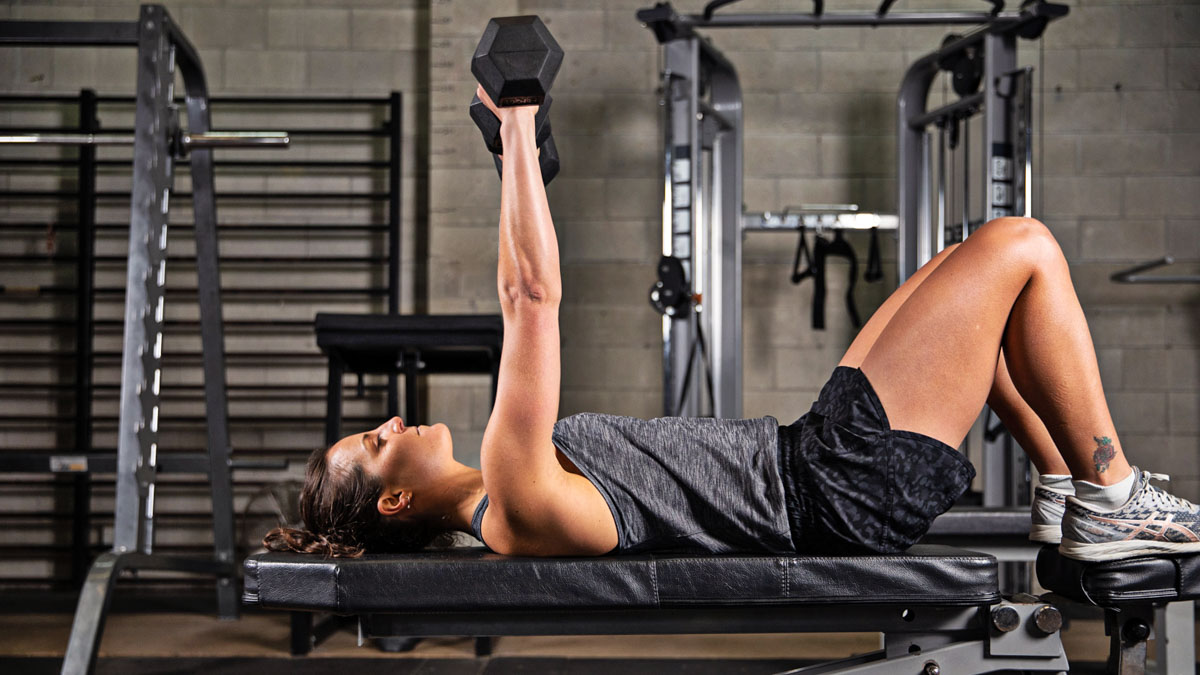
Strength train consistently
-
Prioritise recovery nutrition
You don’t just want to be lighter.
You want to be leaner and powerful.
They are not the same thing.
-
Keep the Calorie Deficit Small and Boring
This is the part no one wants to hear.
If you are training consistently across three sports, your calorie deficit should be modest.
Not aggressive.
Not extreme.
Not a six week challenge.
Scale fluctuations are normal, especially for female athletes. Hormones can shift body weight by a couple of kilos across the week. That does not mean you need to panic and cut more food.
The magic happens with:
-
Small daily habits
-
Consistency
-
Patience
-
Adjusting intake based on training load
That’s how you avoid the rebound.
You Don’t Get Faster by Shrinking Yourself
You get faster by building a strong engine.
If body fat slowly and strategically comes down while that engine is being built properly, that’s where the magic happens.
If your power drops every time you try to lean up, that’s your red flag. Your nutrition strategy is out of balance.
And if you’re putting in hours across swim, bike and run, your nutrition should match that effort.
What to Do Next
If you’re trying to figure this out on your own, start with the Triathlon Nutrition Kickstart course
It will teach you how to:
-
Build your triathlon performance plate
-
Fuel before, during and after sessions
-
Stop guessing and start eating strategically
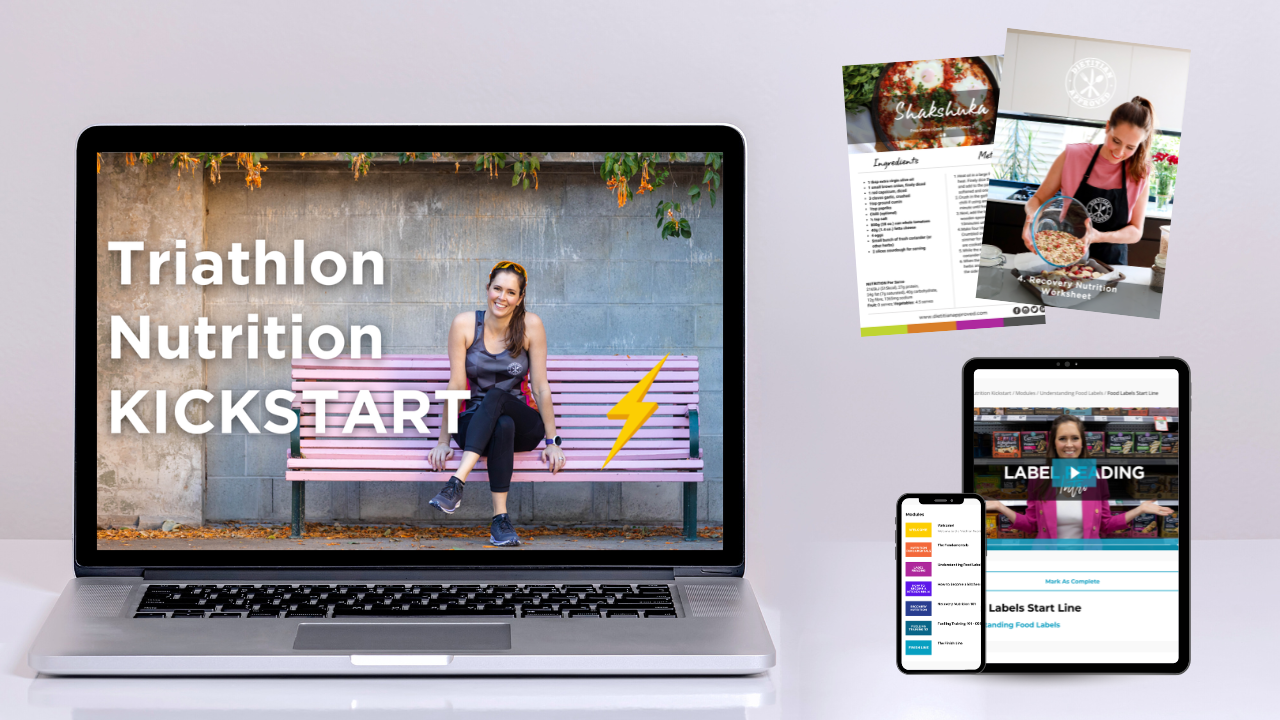
Ready to fuel your training properly?
Start with the Triathlon Nutrition Kickstart Course.
The ULTIMATE
Triathlon Nutrition Checklist
Wondering how well you're nailing your nutrition to support triathlon training and racing?
Download my FREE 50 step checklist to triathlon nutrition mastery.
We hate SPAM. We will never sell your information, for any reason.
Author