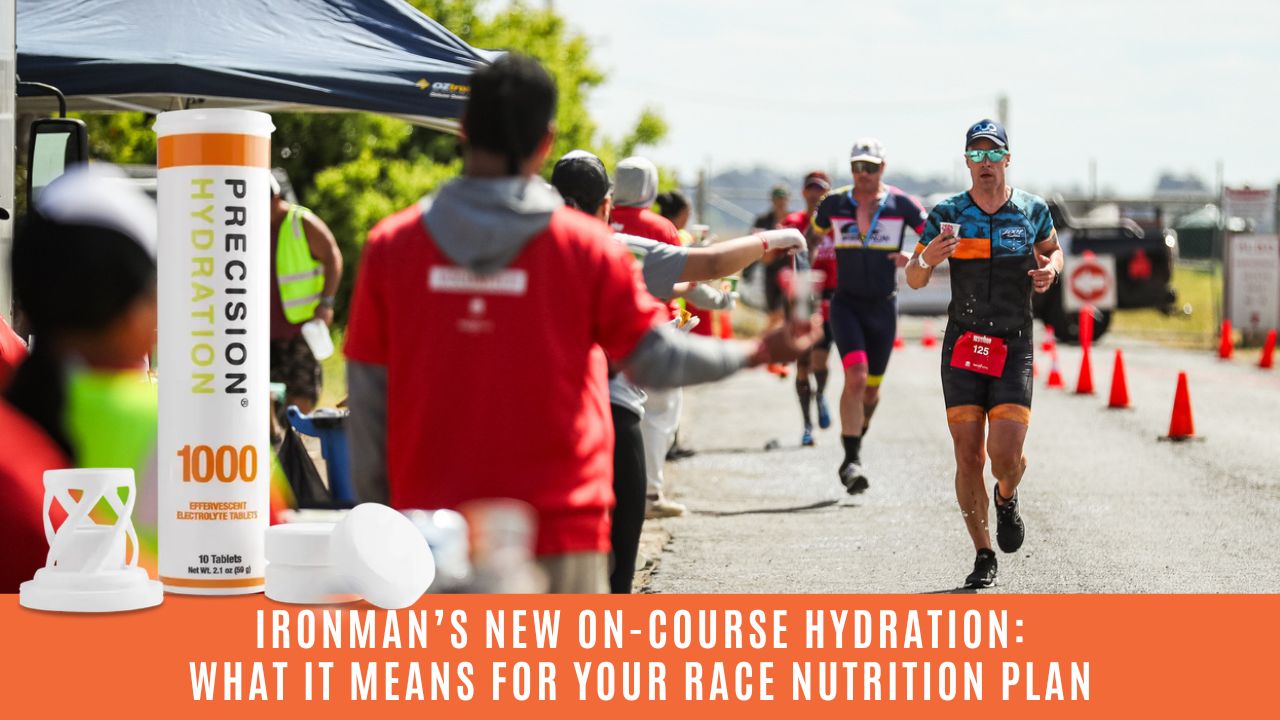
Ironman has changed its on-course hydration globally. On the surface, it looks like a simple supplier swap. In reality, it has big implications for how you fuel, hydrate and execute your race.
If you’ve been relying on on-course sports drink to tick both the hydration and carbohydrate boxes, this changes everything.
In this article, we’ll cover:
-
Exactly what’s changed on Ironman courses
-
Who the new setup will work well for
-
Who needs a new plan
-
How to calculate your sodium intake properly
-
What you should start practising in training now
Let’s break it down.
What Has Ironman Changed on Course?
Globally, all Ironman-branded events have:
-
Switched hydration to Precision Fuel & Hydration PH1000
-
Moved carbohydrate fuelling to Maurten gels and solids
-
Completely separated hydration and carbohydrate delivery
PH1000, when mixed correctly, provides:
Carbohydrate is now coming separately from Maurten products.
This means hydration and fuelling are now completely decoupled.
For some athletes, that’s fine. For others, it’s a potential gut bomb waiting to happen if you don’t plan properly.
Why This Is a Big Deal for Age-Group Triathletes
Hydration and sodium needs are highly individual.
Your:
…are unique to you.
There is no single sodium concentration that magically works for everyone on the start line.
At 70.3 and full distance events, race nutrition failures are rarely one catastrophic mistake. They’re small mismatches that compound over hours until things go pear-shaped.
If you’ve previously relied on sports drink for both carbs and sodium, you now need to rethink your strategy.
How Much Sodium Are You Actually Getting?
Let’s do some simple maths.
PH1000 provides 1000mg sodium per litre when mixed correctly.
But what matters is the volume of the bottle you’re actually handed.
For example:
Now ask yourself:
-
How many bottles per hour are you realistically drinking?
-
Does that meet your fluid needs?
-
Does that sodium match your individual losses?
For some athletes, yes.
For others, not even close.
If you’re a heavy sweater or a salty sweater, winging it with on-course hydration is unlikely to end well.
This is why understanding your sweat rate and sodium losses is not an optional extra at longer distances. It’s a core part of your race nutrition strategy.
If you’ve never assessed this properly, start with our free Triathlon Nutrition Checklist to see where the gaps are in your plan
What About Carbohydrates?
Because PH1000 contains zero carbohydrate, you must now decide:
-
Will you rely on Maurten gels and solids on course?
-
Will you BYO carbohydrate drink?
-
Will you run a hybrid strategy?
If you prefer to drink your carbs, you cannot rely on the on-course hydration anymore. You’ll need to be far more self-sufficient, particularly on the bike.
And remember, on-course products don’t magically work on race day if your gut hasn’t seen them under stress in training.
Practising your race fuelling strategy in race-like conditions is non-negotiable.
That means:
-
Long bricks with your planned intake
-
Race pace efforts
-
Heat exposure if relevant
-
Testing your exact hourly carb targets
Who Will This Setup Work Well For?
The new Ironman hydration system may work well for athletes who:
-
Have moderate sweat rates
-
Lose moderate sodium amounts
-
Prefer gels and solids over liquid carbs
-
Are comfortable separating hydration and fuelling
If that’s you, this setup could simplify things.
But if you:
-
Lose large amounts of sodium
-
Rely heavily on sports drink for carbs
-
Struggle with gels in the heat
-
Have a sensitive gut
…then you need a properly structured plan.
Not guesswork.
How to Build a Race Nutrition Plan That Actually Works
Race nutrition isn’t about what’s on course.
It’s about understanding your body and building a strategy around it.
Here’s what that looks like:
-
Calculate your sweat rate
-
Estimate or test your sodium losses
-
Set a realistic hourly carbohydrate target
-
Decide where each component will come from
-
Pressure test the entire system in training
-
Refine and tweak
The athletes who execute well aren’t lucky.
They’ve dialled, tweaked and finessed their strategy long before race week.
If you want expert guidance through that process, the Triathlon Nutrition Academy walks you step-by-step through building your own personalised race plan
If enrolment isn’t open, start with the Triathlon Nutrition Kickstart Course to build the fundamentals properly
The Bottom Line on Ironman’s Hydration Change
The biggest takeaway?
Hydration, sodium and fuelling are never one-size-fits-all. Especially in long course triathlon.
The new Ironman on-course hydration system isn’t good or bad. It’s simply different.
Your job is to understand:
-
What’s available
-
What your body needs
-
Where the gaps are
Then build a strategy that closes them.
Because the goal on race day isn’t just to survive.
It’s to execute confidently, avoid the bonk and cross the finish line knowing you fuelled like a pro.