
How to Swim Faster as a Triathlete on Just Three Sessions a Week
Jul 03, 2026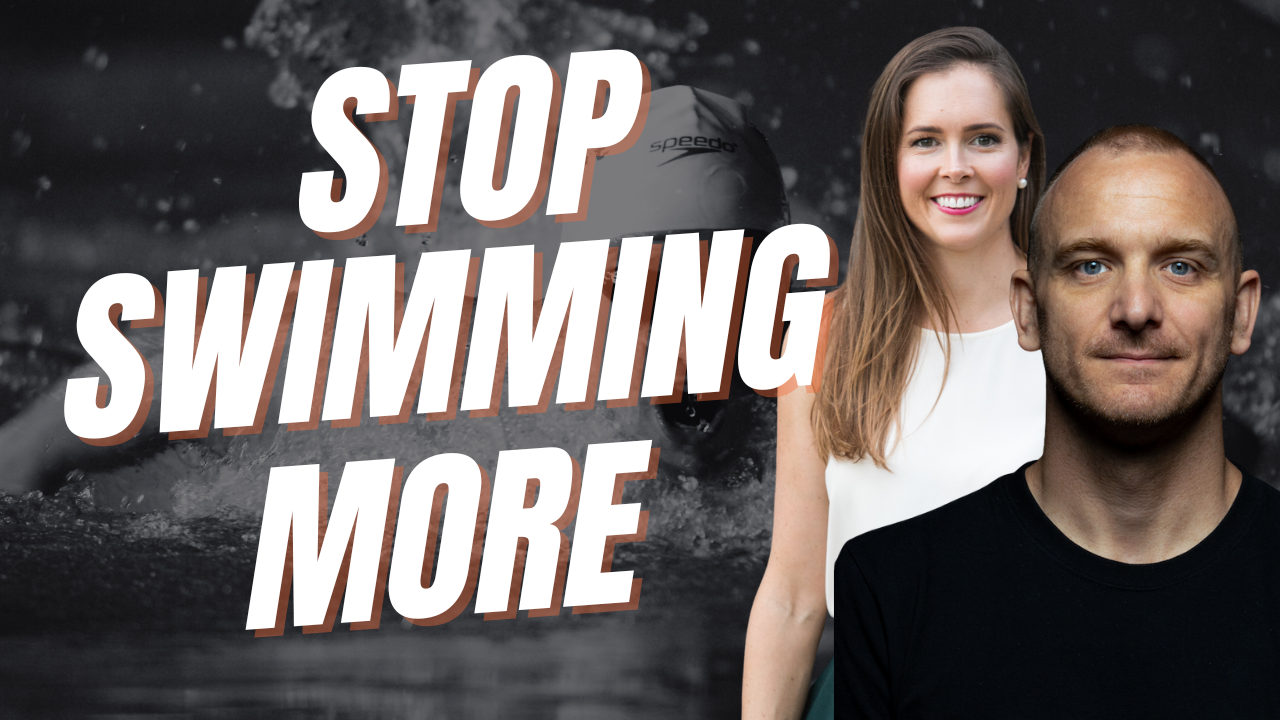
Triathletes who swim three sessions a week can absolutely get faster if each session has a specific purpose. The key is structuring your three weekly swims around three distinct goals: building aerobic capacity, pushing your threshold and developing race-specific speed. Three purposeful sessions done consistently will outperform five unfocused ones every single week.
Most triathletes think the answer to a slow swim is more time in the pool. It isn't.
I've worked with hundreds of age-group triathletes over the years, and the ones stuck in the same lane are almost never the ones swimming too little. They are the ones swimming without purpose. Knocking out laps, ticking a box, showing up three times a week and doing roughly the same thing each time, and wondering why their race split hasn't moved.
The good news is that swimming is one of the most coachable disciplines in triathlon. It rewards precision more than volume. And as I explored in Episode 248 of the Triathlon Nutrition Academy podcast with guest Brian Johns, a three-time Canadian Olympian, former world record holder and now Head of Coaching Science at FORM, you really can get meaningfully faster off just three sessions a week, without adding a single extra lap.
What changes isn't how long you're in the water. It's what you do while you're there.
Why More Pool Kilometres Don't Make You a Faster Triathlete
This is the belief that keeps most age-groupers stuck. More metres equals faster swimming. It isn't true, and it wasn't even true when Brian Johns was at the height of his career.
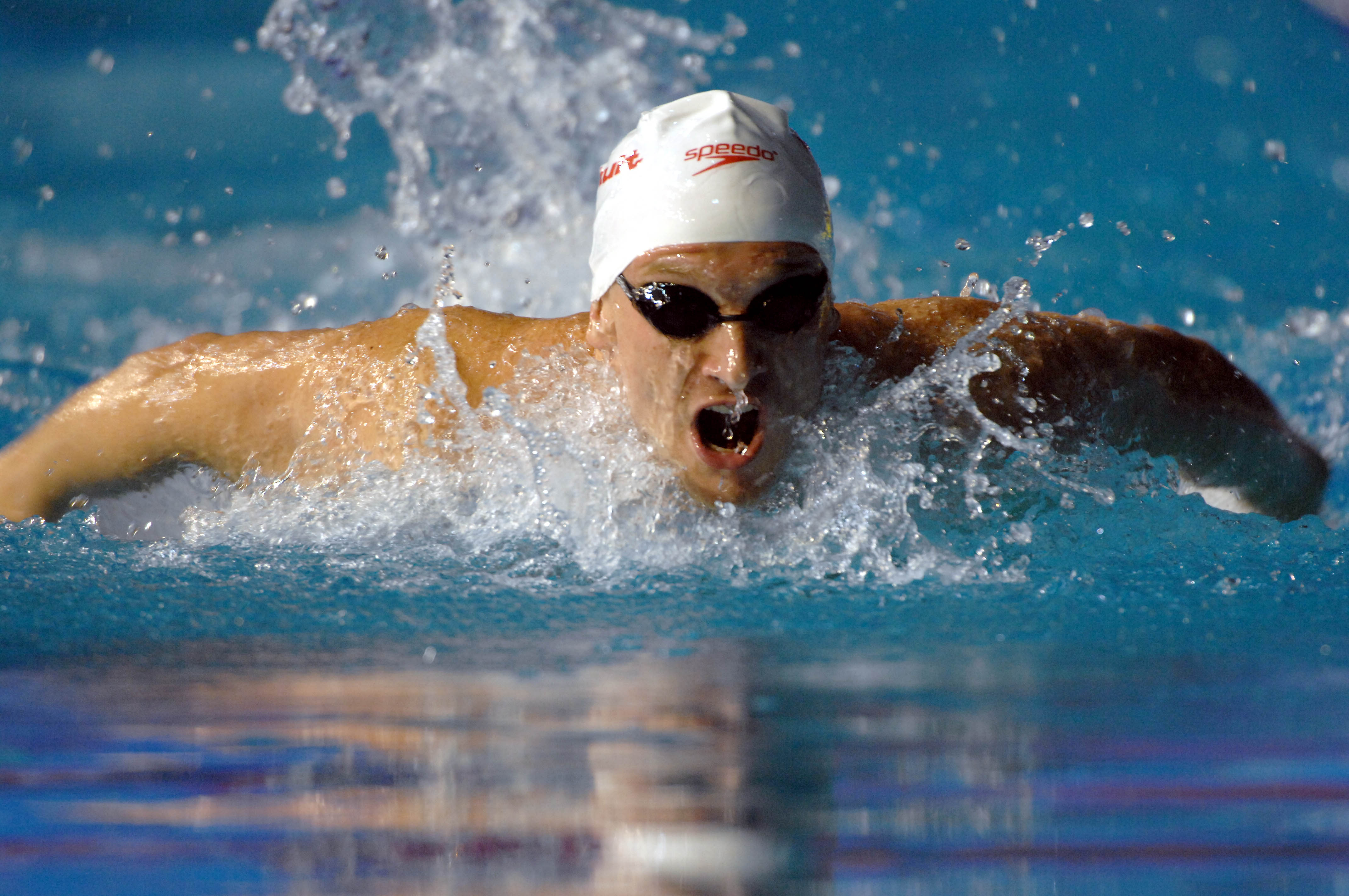
When he broke the short-course 400m individual medley world record in 2003, he was swimming 50 to 60 kilometre weeks. By the time he made the finals at the 2008 Beijing Olympics, his best ever Olympic result, he had dropped to 40 kilometre weeks. Less volume, more purpose, and a meaningful improvement in output.
The reason comes down to technique. When you're tired, your stroke changes. Your stroke count rises, your pull shortens, your kick goes scrambly, and you start grinding through laps with mechanics that are reinforcing exactly what you don't want. Research shows that stroke efficiency decreases measurably as fatigue accumulates within a session, particularly in the final sets (Toussaint & Beek, 1992, Sports Medicine). Doing thousands of repetitions in that degraded state isn't building a faster swim. It's building a slower one.
Brian's coaching philosophy was simple: if the stroke is falling apart, change the workout. The session is written in pencil, not pen. The moment technique breaks down, the rest earned from a shorter, cleaner set is worth more than the metres lost.
For triathletes, who are already managing bike and run sessions on top of their swimming, the argument for focused training is even stronger. Episode 248 covers this in full if you want to hear Brian break it down himself.
The Three-Session Structure Every Triathlete Should Be Using
If you have three swim sessions a week and no coach on deck, here is the structure Brian recommends. One session per goal, each one distinct.
Session 1 - Build Your Aerobic Floor
This is your long, controlled session. The goal is to extend how far you can swim while holding your stroke together, not fast, efficient. Your heart rate should stay low, your stroke count per length should stay consistent from the first lap to the last.
If your stroke count is climbing by the end, your intervals are too long. Shorten them. Swim 50s or 75s instead of 100s. Volume can build gradually over weeks, but only if your technique is holding. If you're starting a set at 40 strokes per 50 metres and finishing at 52, you're doing the wrong session.
For Ironman-focused athletes, this becomes your highest-volume session over time. For sprint or standard-distance athletes, aerobic volume stays lower and the focus shifts earlier toward the next two sessions.
Session 2 - Push Your Threshold
This is where you raise the ceiling. Threshold work sits at that uncomfortable zone, not all-out, but not comfortable either. In swimming terms, most people call it critical swim speed or zone four, keeping heart rate above 160 beats per minute.
The classic set here is 21 x 100m. Brian acknowledges it's effective and mind-numbing in equal measure (Taryn agrees). But you don't have to start there. Begin with 10 x 100m, or even 5 x 150m mixed with shorter reps. The key variable to track is duration, how long can you sustain work at that intensity? Start with 10 to 15 minutes of actual threshold work per session and build from there. Don't chase metres. Chase duration and quality.
Session 3 - Develop Speed and Race-Specific Fitness
This session shifts depending on where you are in the season.
Early season, use it as speed work. Short, sharp efforts, 25s, even shorter if you have access to a dive tank. Plenty of rest. The goal isn't to stress yourself. It's to teach your body to move quicker, so that your race pace feels comfortable rather than frantic.
As the season progresses, shift this toward race specificity. For sprint and standard-distance athletes, a second threshold session makes sense here. For long-course athletes, this becomes a second endurance session with a tempo focus, holding the pace you're actually targeting on race day.
By peak training block, your three sessions should look like: one to build aerobic capacity, one to improve threshold and one that mirrors what you'll need to do in your race.
How to Know If Your Swim Training Is Actually Working
Most triathletes measure progress by time per 100m in a straight set. That's fine. But it misses the real signal.
What you want to know is whether you're holding that pace and those mechanics across the whole session, not just in the first few sets while you're fresh. If you have FORM Goggles, FORM Score tracks this automatically. If you don't, stroke count per length tells you the same thing for free.
Count your strokes on the first length of your session. Count again in the final set. If the numbers are close, your training is working. If they're significantly different, your sessions are too long or too intense for your current level.
The same principle applies to adding a fourth session. Brian's coaching mentor Greg Troy, former head coach at the University of Florida, had a simple rule: if the athlete is still improving, don't add more. The moment improvement stalls, that's your signal to add volume, not before. Adding training load when you're still adapting is how injuries happen and how progress stalls.
Open Water Swimming - How to Swim Faster When the Conditions Are Against You
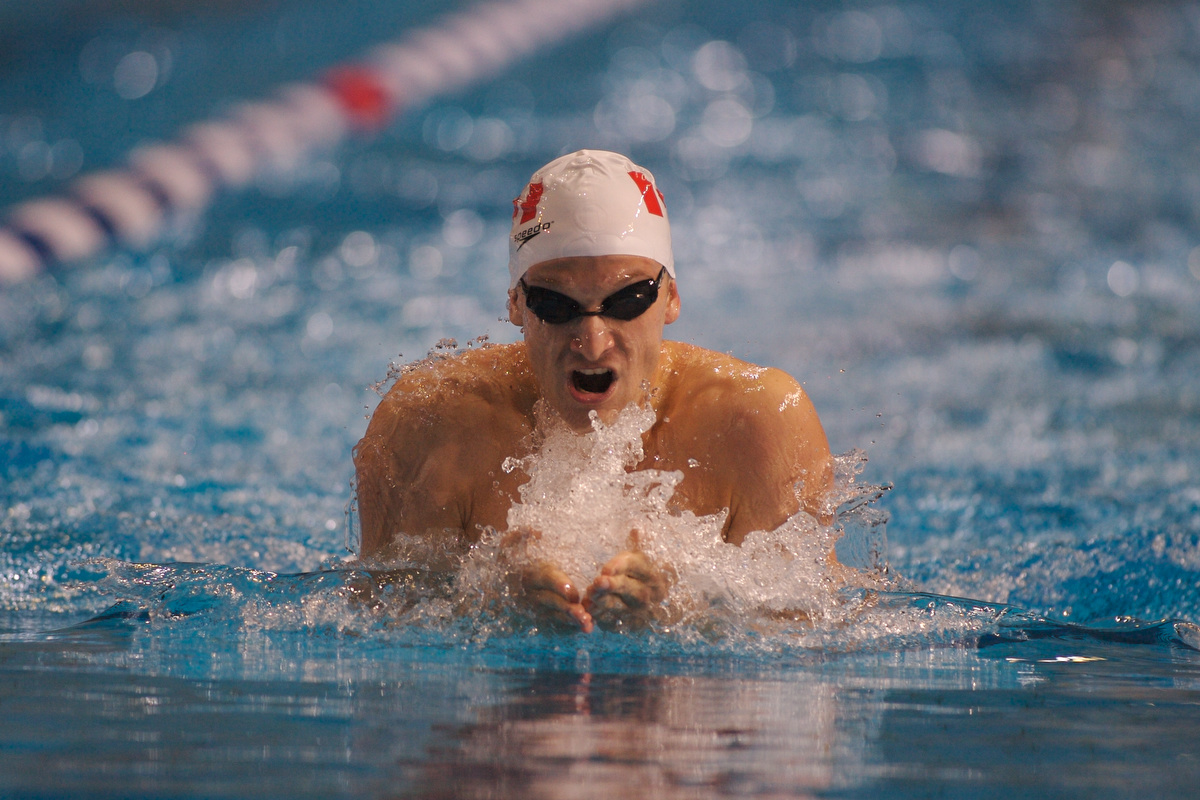
The pool is a controlled environment. Open water isn't, and that gap rattles a lot of triathletes.
Brian frames open water fear as a lack of exposure rather than a lack of fitness. The fix is progressive. Knee deep the first time. Waist deep the next. Fully submerged. Then a stroke or two. Joining a local open water group swim is the fastest path, both for the safety net it provides and because the group dynamic helps pull you forward when nerves kick in.
Sighting is the other skill most triathletes skip, and the cost is significant. Poor sighting can add hundreds of metres to a 70.3 or Ironman swim distance. The good news is it's completely trainable in the pool. Pick a landmark at the end of your lane, a sign, a clock, and practise popping your head up to find it mid-stroke. Time your sight with your breathing pattern so it becomes part of your rhythm rather than a disruption to it.
For rough race days, pull back the pressure. You can't win a triathlon on the swim but you can lose it. Get to the first buoy. Stay smooth and strong. Then take the rest one section at a time.
FAQ - Swim Faster as a Triathlete
Q: How many times a week should a triathlete swim to get faster?
A: Three sessions a week is enough to see real improvement if each session has a distinct purpose: aerobic capacity, threshold and race-specific speed. If you're currently swimming twice a week and still improving, don't add a third session until progress stalls. Adding volume before you've adapted to your current load is the most common way triathletes plateau or pick up overuse injuries.
Q: Does more swimming make you a faster triathlete?
A: Not automatically, no. Volume without purpose reinforces poor technique, especially as fatigue sets in and stroke mechanics deteriorate. Purposeful, structured sessions that keep technique consistent produce better results than high-kilometre weeks done without intent. Three-time Olympian Brian Johns dropped from 60km to 40km weeks between his world record and his best ever Olympic result.
Q: How do I stop my swim technique falling apart during a race?
A: Train the way you want to race. If your stroke count climbs significantly during the final sets of a session, your intervals are too long, shorten them and hold technique across the whole set. A simple two or three word race cue, like smooth and strong, practised during the hardest parts of training, becomes a reliable anchor in the race moment when you can't have a coach on deck.
Q: Why do I swim well in the pool but struggle in open water?
A: Open water introduces elements the pool doesn't have: no walls, no black line, unpredictable conditions and other bodies around you. Fear in open water is usually about unfamiliarity rather than fitness. Start with progressive exposure in a group setting, practise sighting in the pool so it becomes automatic and develop a steady rhythm that doesn't rely on turns and pushoffs to reset.
Q: How do I get better at sighting in open water?
A: Practise in the pool first. Pick a landmark at the end of your lane and lift your head to find it mid-stroke during regular sets. Time your sighting with your breathing rhythm so it doesn't break your stroke. Once the movement feels automatic, transfer it to open water in a calm, low-stakes environment before race day.
The simplest takeaway from everything Brian shared: if your swimming is improving, keep doing what you're doing. If it's plateaued, add one more layer of structure before you add more volume. Three sessions with a clear purpose each will always beat five sessions done without one.
Fuelling matters here too. If you're plateauing and haven't looked at what you're doing around your swim sessions, particularly the recovery between a late-night session and an early morning one, that's often the missing piece. Protein and carbohydrate before bed isn't optional when you're stacking sessions. Even chocolate milk works. The goal is to protect your recovery so you can hit the quality you need the next morning.
If you want to stop guessing and start swimming with a proper nutrition plan behind your training, the Triathlon Nutrition Academy is where we do that work properly, alongside your bike and run.
Ready to fuel your training properly?
Start with the Triathlon Nutrition Kickstart Course.
The ULTIMATE
Triathlon Nutrition Checklist
Wondering how well you're nailing your nutrition to support triathlon training and racing?
Download my FREE 50 step checklist to triathlon nutrition mastery.
We hate SPAM. We will never sell your information, for any reason.
Author