
Pressure in Triathlon: Why Mental Toughness Beats Perfect Preparation
May 22, 2026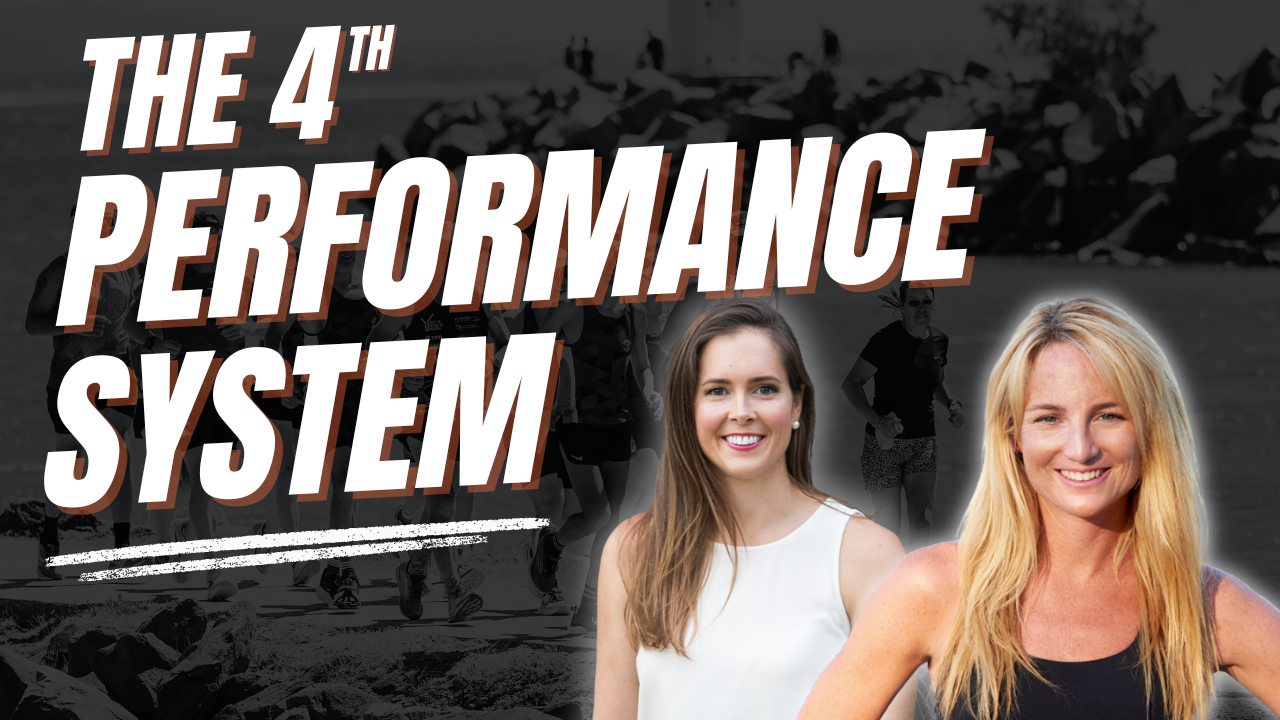
Pressure in triathlon is not the enemy. It is often the thing that helps you perform at your best when you know how to respond to it. Athletes who train their mental performance alongside swim, bike, run and nutrition are more likely to recover quickly from setbacks, stick to their race plan and finish strong even when things go sideways. As sports psychologist Dr Haley Perlus explained on Episode 242 of the Dietitian Approved Podcast, mental toughness is less about being perfect and more about becoming “the best recoverer you can be”.
A mentally strong triathlete is not someone who never struggles. It is someone who can adapt under pressure, regulate emotions and keep moving forward when the race is no longer going to plan.
There Is One Performance System Most Triathletes Ignore
You train your swim. You train your bike. You train your run.
Hopefully you are also training your race nutrition and gut tolerance too.
But there is one performance system that many age-group triathletes completely neglect until race week. Your mental performance.
And the frustrating part? It is often the exact thing that determines whether you hold it together when the wheels fall off during a race.
Because eventually, something always goes wrong.
You flat a tyre. Your stomach turns inside out at kilometre 12 of the run. Your pacing blows up. The swim turns into a washing machine. Your power numbers disappear. Your nutrition plan goes out the window.
The athletes who perform best are not usually the ones with the most perfect race. They are the ones who recover fastest when things stop being perfect.
That was one of the biggest takeaways from my conversation with sports psychologist Dr Haley Perlus on the podcast this week.
Why Mental Performance Is Different From Mental Health
One of the most important distinctions Haley made was the difference between mental health and mental performance.
Mental health relates to psychological wellbeing. Mental performance is your ability to perform under pressure.
They absolutely influence each other, but they are not the same thing.
You can be mentally tough in competition while still struggling with mental health challenges outside of sport. Michael Phelps is a great example of that.
Mental performance is a trainable skill. Just like your cadence on the bike or your ability to tolerate 90g of carbohydrate per hour, it improves with practice and repetition.
And yet many athletes leave it until two weeks before an Ironman to think about it.
That is the equivalent of trying to gut train the week before race day. It is simply too late.
Why “Perfect” Athletes Usually Struggle the Most
A lot of triathletes are high performers outside of sport too. They are driven, disciplined and deeply competitive with themselves.
That can be a strength.
It can also become the exact thing that sabotages performance.
Dr Perlus explained that many athletes become obsessed with perfection instead of adaptability.
If your race can only be successful when every variable lines up perfectly, you are setting yourself up to mentally crumble the moment something shifts.
The best athletes are not the perfect athletes.
They are the best recoverers.
That mindset shift matters enormously in triathlon because the sport is inherently unpredictable.
If Your Race Stops Going to Plan, Then Do This
Dr Perlus shared a simple question athletes can use immediately:
“What does this moment need from me?”
That single question moves you from panic into strategy mode.
Instead of catastrophising, you focus on solving the next problem.
If you puncture:
Then fix the tyre and keep moving.
If your stomach shuts down:
Then reduce intensity, adjust fuelling and recover.
If you miss your time goal:
Then race the conditions you actually have instead of the fantasy version in your head.
That flexibility is what keeps athletes mentally engaged instead of emotionally collapsing.
How to Train Mental Toughness Before Race Day
You do not magically become resilient on race day.
You rehearse it.
One of the most practical strategies Haley shared was creating a “what if” plan before your race.
Build a What-If Framework
Before your next event, list every possible thing that could go wrong:
- Flat tyre
- Missed nutrition
- Cramping
- Heat issues
- Swim panic
- Vomiting
- Aid station mistakes
- Lost bottle
- Mechanical problems
Then write your recovery response beside each one.
This trains your brain to expect adaptation rather than panic.
Research shows that athletes who use structured mental rehearsal improve confidence, emotional control and decision-making under stress (Slimani et al., 2016, International Journal of Sports Physiology and Performance).
Visualization is not just imagining the perfect race. It is rehearsing how you respond when things become imperfect.
The Dangerous Side of Nutrition Perfectionism
This conversation also highlighted something I see constantly with triathletes around nutrition.
Athletes place so much pressure on themselves to eat perfectly that one mistake completely derails them.
They eat one off-plan meal and suddenly:
“Well, today is ruined anyway.”
That all-or-nothing mindset creates huge inconsistency.
Dr Perlus described this beautifully when she said many athletes think they are controlling the plan, but eventually the plan starts controlling them.
And honestly? That is not high performance. That is anxiety disguised as discipline.
The 80/20 Approach Works Better Long-Term
For most age-group triathletes:
- 80% consistency will outperform 100% perfection followed by burnout
- Flexibility creates sustainability
- Food should support your life, not dominate it
This is why inside the Triathlon Nutrition Academy I teach athletes how to eat without needing to track every calorie or macro forever.
Because if your nutrition only works when MyFitnessPal is open, then you have not actually learned the skill yet.
Studies consistently show that rigid dietary restraint is associated with higher stress and poorer long-term adherence compared to flexible dietary control (Westenhoefer, 1991, Appetite).
Why Pressure Can Actually Improve Performance
One of my favourite concepts from this episode was Haley’s idea that pressure is an invitation rather than a threat.
Most athletes experience pressure and immediately interpret it as danger.
But pressure can also sharpen focus, increase engagement and elevate performance when interpreted correctly.
Research on challenge vs threat states in athletes supports this. When athletes perceive pressure as a challenge rather than a threat, they demonstrate better cardiovascular responses, improved decision-making and superior performance outcomes (Jones et al., 2009, International Review of Sport and Exercise Psychology).
Ask Yourself This During Training
When training gets hard, ask:
“What is this pressure inviting me to do?”
Sometimes the answer is:
Slow down and reset.
Sometimes the answer is:
Step up and rise to the challenge.
The key is staying engaged rather than emotionally shutting down.
Why Underfuelled Athletes Mentally Fall Apart Faster
This was a huge crossover between psychology and sports nutrition.
Your brain requires glucose to function properly.
When athletes are significantly underfuelled, their emotional regulation and decision-making deteriorate rapidly.
This is exactly why athletes who bonk often become irrational, negative or emotionally overwhelmed during races.
It is not just physical fatigue.
It is neurological fatigue too.
Well-fuelled athletes consistently make better decisions under pressure because the brain has adequate energy availability to function effectively.
I covered this in more depth in [Episode 238 - Stop Optimising the 5% You Haven’t Earned Yet].
Mental Recovery Matters Just as Much as Physical Recovery
Most triathletes understand physical recovery.
Very few understand mental recovery.
Dr Perlus explained that true mental recovery is not simply doing another task. It is intentionally creating calm and peace.
That might look like:
- Walking without headphones
- Quiet coffee time
- Reading fiction
- Gardening
- Sitting in silence
- Easy movement without metrics
If every moment of your day requires performance, output and optimisation, your nervous system never fully resets.
And eventually your motivation suffers.
The Most Mentally Tough Athletes Do This
According to Haley, mental toughness ultimately comes down to one thing:
Showing up when you do not feel like it.
Not recklessly.
Not ignoring your body.
But being willing to tolerate discomfort and keep moving forward anyway.
That is endurance sport.
And honestly, that skill transfers into every other part of life too.
FAQ
Q: How can I improve my mental toughness for triathlon?
A: Mental toughness improves through repetition and deliberate practice. Use visualisation, create what-if race plans and practice recovering quickly when training sessions go wrong. The goal is not perfection. The goal is adaptability under pressure.
Q: What should I do mentally when something goes wrong during a race?
A: Ask yourself: “What does this moment need from me?” This shifts your brain from panic mode into problem-solving mode. Focus only on the next actionable step instead of catastrophising the entire race.
Q: Does nutrition affect mental performance in triathlon?
A: Absolutely. Your brain relies heavily on glucose to regulate emotions, decision-making and focus. Underfuelled athletes are more likely to experience emotional swings, poor pacing decisions and mental fatigue during races.
Q: Why do I feel flat after a big race even if it went well?
A: Long-course triathlon creates massive physical, emotional and mental stress. Feeling flat afterwards is common because your nervous system and energy stores are depleted. Recovery nutrition, sleep and emotional decompression are all important in the days after racing.
Q: Is tracking calories and macros necessary for triathlon performance?
A: Not always. Tracking can be a useful educational tool, but many athletes become overly dependent on it. Long-term performance improves when athletes understand how to fuel intuitively around training demands rather than relying on constant tracking.
You Do Not Need a Perfect Race to Perform Well
Some of the strongest race performances I have ever seen were messy.
Athletes lost nutrition bottles. Athletes vomited. Athletes punctured tyres. Athletes missed splits.
But they adapted.
And that ability to recover under pressure is often what separates a good race from a disastrous one.
If your mental game currently only works when everything is going perfectly, then that is probably your next area of training.
Because triathlon is not really about perfect conditions.
It is about solving problems while moving forward.
If you want help building both your race nutrition and race execution skills, check out the Triathlon Nutrition Academy where we teach athletes how to fuel, recover and perform with confidence across every stage of training and racing.
Ready to fuel your training properly?
Start with the Triathlon Nutrition Kickstart Course.
The ULTIMATE
Triathlon Nutrition Checklist
Wondering how well you're nailing your nutrition to support triathlon training and racing?
Download my FREE 50 step checklist to triathlon nutrition mastery.
We hate SPAM. We will never sell your information, for any reason.
Author