Recovery Nutrition for Triathletes: Why You Still Feel Wrecked
May 29, 2026
Recovery nutrition for triathletes should start within 30 to 60 minutes after training and include both carbohydrate and protein to restore glycogen, repair muscle damage and support adaptation. Delaying recovery nutrition by even two hours can reduce muscle glycogen resynthesis rates by almost 45% (Ivy et al., 1988, Journal of Applied Physiology). For busy age-group triathletes juggling work, kids and multiple daily sessions, poor recovery nutrition is one of the fastest ways to end up with heavy legs, afternoon crashes and sessions that feel harder than they should.
As an Advanced Sports Dietitian who has worked with triathletes for nearly two decades, including six years with Triathlon Australia, I can tell you this with confidence: your fitness gains happen in recovery, not during the session itself.
Jade finishes her 6am ride, rushes through a shower, packs lunches, wrangles kids out the door and heads to work running on fumes. By 3:30pm she’s raiding the pantry like a gremlin and wondering why her legs still feel smashed three days later.
Sound familiar?
This is the reality for a lot of age-group triathletes. You’re committed. You train consistently. You’re ticking off the sessions. But if your recovery nutrition is an afterthought, you’re making training significantly harder than it needs to be.
And the frustrating part? Most triathletes think they’re doing a decent job with recovery.
Why Recovery Nutrition Matters More Than Most Triathletes Realise
Every training session creates stress on your body. Muscle fibres are damaged. Glycogen stores are depleted. Hormones shift. Your immune system takes a hit.
That’s normal. That’s training.
But adaptation does not happen during the session itself. It happens afterwards when your body has enough fuel and nutrients available to repair and rebuild.
If your recovery nutrition is poor, the training session still happened, but your body struggles to actually adapt from it.
A classic example is glycogen restoration. Research has shown that delaying post-exercise nutrition by two hours can reduce glycogen resynthesis rates by close to 45% (Ivy et al., 1988, Journal of Applied Physiology).
For triathletes doing back-to-back sessions or high-volume weeks, that matters enormously.
If your glycogen stores are still partially depleted from yesterday, today’s session starts with a half-empty fuel tank.
And that compounds quickly across the week.
What Should Triathletes Eat After Training?
Recovery nutrition for triathletes is not just about smashing a protein shake and hoping for the best.
You need both carbohydrate and protein.
Carbohydrate Restores Your Fuel Tank
Carbohydrate replenishes muscle glycogen stores.
After endurance sessions, most triathletes need approximately 1 to 1.2g of carbohydrate per kilogram of body weight within the first hour after exercise, particularly if another session is coming within 24 hours (Burke et al., 2017, Journal of Sports Sciences).
If you weigh 70kg, that means roughly 70 to 84g of carbohydrate after training.
That is significantly more than most athletes realise.
Protein alone after a two-hour ride will not refill depleted glycogen stores.
Your muscles are sitting there screaming for carbohydrate while you sip a 20g whey shake and call it recovery.
Protein Supports Muscle Repair
Protein matters too.
Aim for approximately 20 to 40g of high-quality protein after training depending on session load and body size (Morton et al., 2018, British Journal of Sports Medicine).
If your session was particularly long or intense, lean towards the higher end.
If/Then Recovery Framework
If you have another hard session within 24 hours, then prioritise rapid carbohydrate intake immediately after training.
If your goal is body composition alongside performance, then recovery nutrition still matters. Under-recovering often drives aggressive afternoon hunger and poor food choices later in the day.
If you consistently wake up with sore, heavy legs, then your recovery strategy likely needs work before your training plan does.
The Three Biggest Recovery Nutrition Mistakes Triathletes Make
1. Having No Recovery Plan
This is by far the most common issue I see.
The session finishes and life takes over.
You stop your Garmin and suddenly you’re answering emails, driving kids to sport or standing in the kitchen eating random handfuls of cereal while wondering what happened.
Recovery nutrition becomes accidental instead of intentional.
The problem is your hunger signals after exercise are not always reliable. Some athletes lose appetite entirely after training while others turn into vacuum cleaners.
Neither is a great recovery strategy.
Having a specific recovery plan removes decision fatigue when you’re already tired and depleted.
2. Focusing on Protein But Ignoring Carbohydrate
Protein gets all the airtime online.
Meanwhile endurance athletes are chronically under-eating carbohydrate.
In my work with TNA athletes, this is one of the biggest gaps we uncover. Athletes often think they’re recovering well because they’re having a protein shake, but they’re nowhere near their carbohydrate requirements.
And triathlon recovery is very different to gym-based recovery.
A strength athlete training once per day has very different fuelling demands to a triathlete trying to cram swim, bike and run into one week while also functioning like a normal human.
Generic nutrition advice misses that entirely.
3. Delaying Recovery Nutrition Too Long
Timing matters.
A lot.
The earlier you eat after training, the faster and more effectively your body can begin restoring glycogen and repairing muscle tissue.
If you finish a 6am ride and don’t properly eat until lunch, you are spending your entire morning under-recovered.
That means lower energy availability, poorer concentration, reduced training adaptation and a much greater likelihood of afternoon energy crashes.
You cannot out-train poor recovery habits.
Signs Your Recovery Nutrition Is Not Working
Your body gives you clues long before you completely fall apart.
Common Signs of Under-Recovery
- Heavy legs that never feel fresh
- Struggling to back up sessions across the week
- Sessions feeling harder than they should
- Afternoon energy crashes or “3:30itis”
- Constant sugar cravings
- Frequent illness during peak training blocks
- Plateaued performance despite consistent training
- Body composition not shifting despite high training loads
None of these are just “part of being a triathlete”.
They are warning signs.
What Good Recovery Actually Feels Like
Proper recovery nutrition changes more than just soreness.
Signs Your Recovery Nutrition Is Working
- You can handle back-to-back hard sessions
- Energy stays more stable throughout the day
- You stop chasing sugar every afternoon
- Your FTP and key metrics continue improving
- Your immune system holds up during big training loads
- You feel stronger inside sessions instead of simply surviving them
Across our cohort of TNA athletes, the difference between athletes who adapt well and athletes who constantly feel smashed often comes down to what happens in the two hours after training.
Not talent.
Not toughness.
Recovery.
Why Busy Triathletes Need Recovery Systems, Not Motivation
Most age-group triathletes do not fail recovery because they’re lazy.
They fail because they’re busy.
You cannot rely on motivation after a hard session when work, kids and life are already demanding your attention.
You need systems.
That means:
- Having recovery food ready before training
- Knowing your carbohydrate and protein targets
- Building recovery habits into your daily routine
- Planning for double-session days in advance
Because when recovery becomes automatic, consistency becomes easier.
And consistency is what drives long-term performance.
I covered this in more depth in Episode 238 - Stop Optimising the 5% You Haven't Earned Yet
FAQ
Q: How soon should triathletes eat after training?
A: Ideally within 30 to 60 minutes after finishing exercise. This is when your muscles are most efficient at absorbing carbohydrate and beginning glycogen restoration. Waiting several hours significantly slows recovery processes.
Q: Is protein or carbohydrate more important after training?
A: Both matter, but endurance athletes often under-prioritise carbohydrate. Protein repairs muscle tissue while carbohydrate restores glycogen stores. Triathletes need both to properly recover.
Q: Why do I crave sugar every afternoon during heavy training?
A: Persistent sugar cravings are often a sign of under-fuelling earlier in the day, particularly poor recovery nutrition after morning sessions. Your body is trying to compensate for depleted energy stores.
Q: Can poor recovery nutrition affect body composition?
A: Yes. Chronic under-recovery can increase hunger, drive overeating later in the day and reduce training quality. Proper recovery nutrition often improves body composition outcomes by supporting better energy regulation and training adaptation.
Q: What is the best recovery meal after a long ride?
A: A recovery meal should contain both carbohydrate and protein. For example, rice with chicken and vegetables, oats with fruit and Greek yoghurt or a recovery smoothie plus additional carbohydrate sources depending on session duration.
Most triathletes spend enormous amounts of time obsessing over training sessions while completely neglecting the thing that actually creates adaptation.
Recovery.
You do not get fitter from the session itself. You get fitter from recovering properly from it.
And if you’re constantly feeling sore, flat, hungry or unable to back up sessions, your body is waving a giant red flag that your recovery strategy needs attention.
The good news is this is fixable. Often surprisingly quickly.
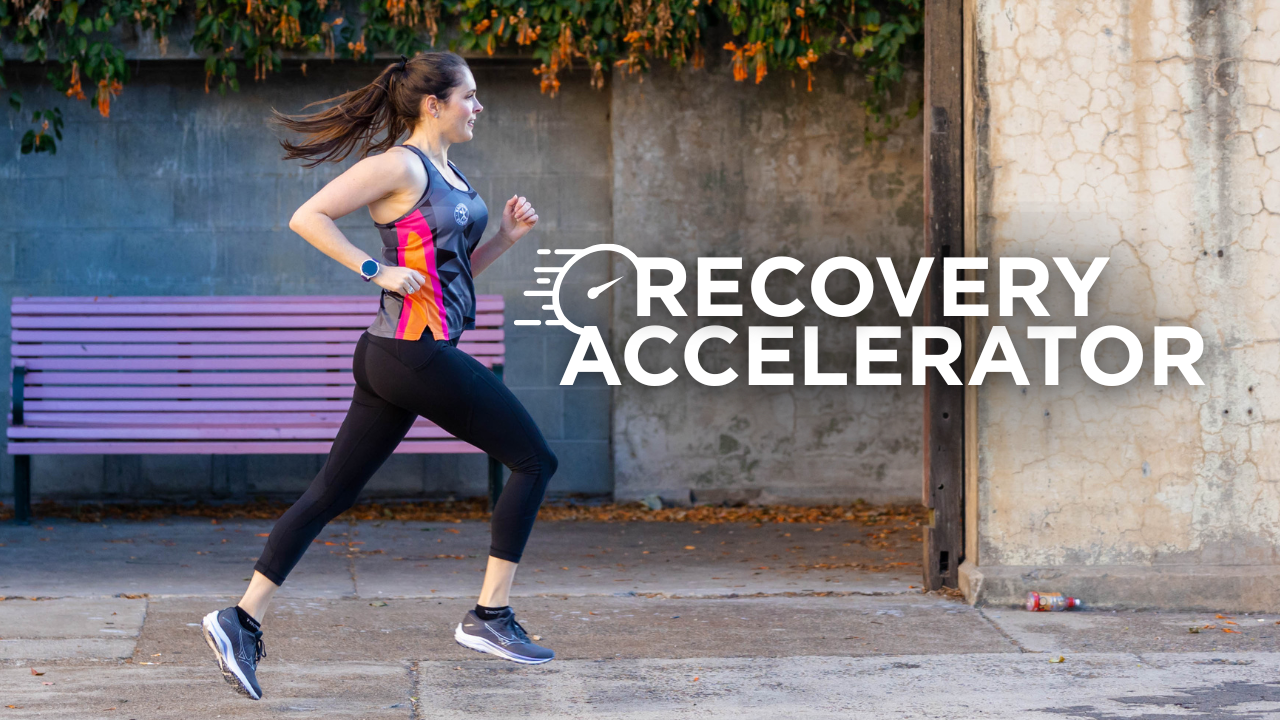
If you want a step-by-step recovery nutrition framework specifically designed for triathletes, check out the Recovery Accelerator Course.
Inside, I walk you through exactly what to eat after every session and race so you can recover faster, train harder and actually adapt from the work you’re already doing.
Ready to fuel your training properly?
Start with the Triathlon Nutrition Kickstart Course.
The ULTIMATE
Triathlon Nutrition Checklist
Wondering how well you're nailing your nutrition to support triathlon training and racing?
Download my FREE 50 step checklist to triathlon nutrition mastery.
We hate SPAM. We will never sell your information, for any reason.
Author