
Maurten vs Precision vs SIS Beta Fuel: A Dietitian's Verdict
Jul 28, 2026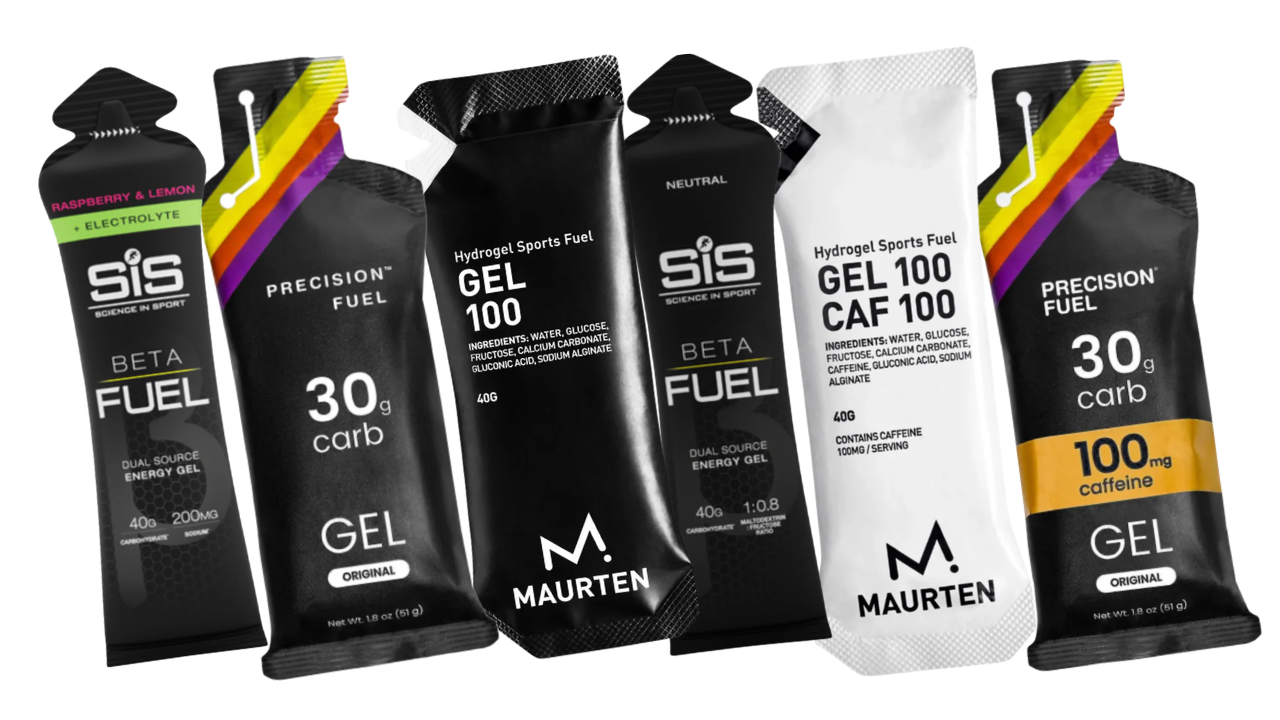
Quick answer: In the Maurten vs Precision debate, there is no single "best" gel, but there is a best gel for your gut, your race and your wallet. Maurten Gel 100 (25g of carbohydrate, a 1:0.8 glucose to fructose ratio) is the smoothest hydrogel but the most expensive per gram of carbohydrate at around $20.80 per 100g of carbs. Precision PF 30 (30g of carbohydrate, a 2:1 ratio) is a middle-ground gel at about $15.80 per 100g of carbs. SIS Beta Fuel (40g of carbohydrate, a 1:0.8 ratio) delivers the most carbohydrate for the least money at roughly $12.40 per 100g of carbs. Pick the one your stomach tolerates at your race pace, then work out the cost.
Every triathlete I talk to wants me to crown a winner. Maurten has the cult following and the pro-peloton glow. Precision has the sweat-testing brand behind it. SIS has been in bike bottles for two decades. So which one actually earns a spot in your race belt?
One thing worth saying up front: gels are the sprinkles on the icing on your cake. They matter, but only once you have baked the sponge, which is your daily fuelling and your carbs per hour target. If you are still winging it day to day, the brand of gel is not your problem. I am very much Switzerland on this. I take no kickbacks from any of these companies, so what follows is the evidence, the numbers and my honest verdict, not affiliate links.
Maurten vs Precision vs SIS: How Do the Three Gels Actually Compare?
Let's put the three side by side on the things that actually change your race: how much carbohydrate you get, the ratio of sugars used to move it into your bloodstream, and what it costs you per 100g of carbohydrate (the fairest way to compare, because a bigger gel should cost more).
| Gel | Carbohydrate per gel | Glucose to fructose ratio | Approx price per gel (AUD) | Cost per 100g of carbs |
|---|---|---|---|---|
| Maurten Gel 100 | 25g | 1:0.8 (hydrogel) | ~$5.20 | ~$20.80 |
| Precision PF 30 | 30g | 2:1 | ~$4.75 | ~$15.80 |
| SIS Beta Fuel | 40g | 1:0.8 | ~$4.95 | ~$12.40 |
Prices move around with sales and retailers, so treat these as ballpark. But the pattern holds: gram for gram of carbohydrate, SIS Beta Fuel is the cheapest, Precision sits in the middle, and Maurten is the premium option. To hit 90g of carbohydrate in an hour, that is a bit over two SIS Beta Fuel gels (around $11) or nearly four Maurten Gel 100s (around $19) for the exact same hour of fuel.
Does the Glucose to Fructose Ratio in Maurten vs Precision Actually Matter?
Yes, and this is where the science gets interesting. Your gut can only absorb about 60g of glucose per hour before the transporters that carry it (called SGLT1) are maxed out. Fructose uses a completely different doorway (a transporter called GLUT5), so adding fructose lets you absorb more total carbohydrate per hour without the leftover sugar sitting in your gut causing a gut bomb.
This is not marketing. Currell and Jeukendrup (2008, Medicine & Science in Sports & Exercise) had trained cyclists ride to exhaustion on either glucose alone or a glucose plus fructose mix at the same carbohydrate rate. The glucose plus fructose group improved time-trial performance by 8%. That is free speed from the ratio alone!
The debate is over the exact ratio. Older gels used 2:1 glucose to fructose (Precision PF 30 still does). Newer high-carb gels moved to 1:0.8 (Maurten and SIS Beta Fuel), which pushes more fructose in to fill the gap once glucose is saturated. O'Brien and Rowlands (2011, American Journal of Physiology-Gastrointestinal and Liver Physiology) tested three ratios during hard cycling and found the 1:0.8 blend gave the highest carbohydrate oxidation efficiency (how much of what you swallow you actually burn) and, importantly, the lowest gut distress.
So if you are fuelling above roughly 60g per hour, then the 1:0.8 ratio in Maurten or SIS Beta Fuel has a small edge on paper. If you are fuelling at or under 60g per hour for shorter racing, then the ratio difference is close to meaningless.
Which Gel Is Easiest on Your Stomach?
This is the question that actually wins or loses races, and it is the one no brand can answer for you. You are your own experiment here, your own special unicorn.
Maurten's whole pitch is the hydrogel, where the carbohydrate is wrapped in a gel that is meant to pass through the stomach more gently. Plenty of athletes swear the texture is easier to get down late in a race. Others find it claggy and hard to swallow without water. Precision PF 30 is deliberately mild and not very sweet, which suits people who gag on sugary gels. SIS Beta Fuel packs 40g into one sachet, which is efficient but a bigger hit of carbohydrate at once, so it can feel heavier if you are not used to it.
Here is the rule that matters more than any brand: never try anything new on race day. If your race is more than 12 weeks out, then start testing one gel on your long rides now and build your gut up to the carbohydrate rate you plan to race at. Gut training is a real, trainable skill! If your race is inside 2 weeks, then stick with whatever your stomach already knows, even if a fancier gel is on sale.
Which Gel Should You Choose for Your Race Distance?
The right gel changes with how long you are out there and how much carbohydrate you need per hour.
- Sprint and Olympic distance: You need less total carbohydrate, so cost and convenience win. If you are racing under 2.5 hours, then a Precision PF 30 or a single gel every 30 to 40 minutes is plenty.
- 70.3 (half Ironman): You are now fuelling for 4 to 6 hours and the ratio starts to matter. If you tolerate them, then the 1:0.8 gels (Maurten or SIS) let you push higher carbohydrate rates with less gut fallout.
- Ironman: Total cost and total volume both add up fast. If you are doing an Ironman on gels alone, then SIS Beta Fuel gives you the most carbohydrate for the least money and the fewest sachets to carry, though many athletes mix gels with drink mix and real food.
I go much deeper on setting your actual number in my guide to carbs per hour for triathlon, which is the piece to read before you spend a cent on gels. If you want the full field of gels rather than just these three, I broke down the market in best triathlon gels compared for 2026.
Is Maurten Worth the Extra Money?
It depends (my favourite answer, and I stand by it). Maurten is a really good product and the hydrogel suits some guts beautifully. But you are paying a clear premium: around $20.80 per 100g of carbohydrate versus $12.40 for SIS Beta Fuel delivering the same job. That is roughly a 68% price bump.
If Maurten is the only gel your stomach loves at race intensity, then it is absolutely worth it, because a gel you can actually keep down beats a cheaper one you throw up every time. If your gut handles all three equally well, then you are paying extra mostly for the brand and the texture. Spend the difference on your race entry, not on marketing.
Frequently Asked Questions
Q: Is Maurten better than Precision?
Not automatically. Maurten Gel 100 uses a 1:0.8 glucose to fructose ratio and a hydrogel texture, while Precision PF 30 uses a 2:1 ratio and a milder taste. For fuelling above 60g of carbohydrate per hour, the 1:0.8 ratio has a small edge on oxidation efficiency, but Precision is cheaper per gel and easier on some stomachs. The better gel is the one your gut tolerates at race pace.
Q: What is the difference between a 2:1 and a 1:0.8 carbohydrate ratio?
Both mix glucose and fructose so you can absorb more total carbohydrate per hour than glucose alone. A 2:1 ratio (Precision) uses twice as much glucose as fructose. A 1:0.8 ratio (Maurten and SIS Beta Fuel) adds more fructose, which research shows lets you push higher carbohydrate rates with better absorption and less gut distress once you are fuelling above about 60g per hour.
Q: How many gels do I need per hour?
It depends on your target carbohydrate rate and the gel. To hit 90g of carbohydrate per hour you would need about 3.6 Maurten Gel 100s, 3 Precision PF 30s, or 2.25 SIS Beta Fuel gels. Most age-group triathletes aim for 60 to 90g per hour and build up to it through gut training, never straight to the top number on race day.
Q: Which gel is best for a sensitive stomach?
There is no universal answer, because gut tolerance is highly individualised. Maurten's hydrogel and Precision's low-sweetness formula are both popular with sensitive stomachs, but the only way to know is to test one gel repeatedly on long training sessions well before race day. Pair every gel with water and practise at your goal race intensity, not just easy pace.
Q: Can I mix different gel brands in one race?
Yes, as long as you have practised it. Your gut does not care about the logo, it cares about the total carbohydrate and the glucose to fructose ratio it is being asked to absorb. Just test your combination on long rides first so you know it sits well at race intensity.
Bottom Line: Maurten vs Precision vs SIS
There is no single winner in the Maurten vs Precision vs SIS Beta Fuel debate, and any brand that tells you otherwise is selling something. The ratio science gives the 1:0.8 gels (Maurten and SIS) a slight edge when you are fuelling hard, SIS Beta Fuel wins clearly on cost per gram of carbohydrate, and Precision is the mild, middle-ground option. But the gel that keeps you fuelled and out of the portaloo is the one your gut has trained on, whatever the price tag.
Sort your daily fuelling and your carbs-per-hour number first, then choose your gel to match. If you are not sure your foundations are solid yet, do not stress, it is an easy fix with the right checklist. Grab my free Triathlon Nutrition Checklist and make sure you have baked the sponge before you argue about the sprinkles.
Ready to fuel your training properly?
Start with the Triathlon Nutrition Kickstart Course.
The ULTIMATE
Triathlon Nutrition Checklist
Wondering how well you're nailing your nutrition to support triathlon training and racing?
Download my FREE 50 step checklist to triathlon nutrition mastery.
We hate SPAM. We will never sell your information, for any reason.
Author