
Triathlon Off-Season Nutrition: 3 Mistakes to Avoid
Nov 06, 2026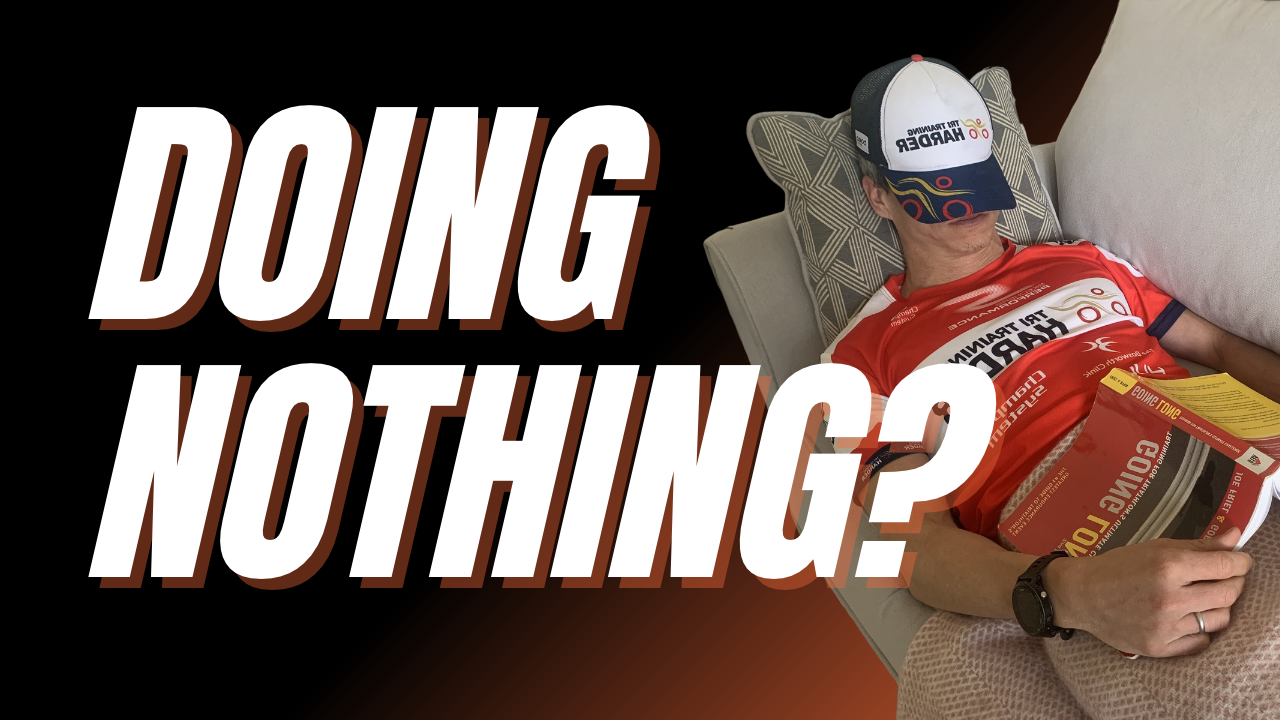
The 3 biggest triathlon off-season nutrition mistakes are the post-race blowout, dieting too hard while your training drops and doing nothing at all. A 2-week break after your A race is healthy, but a 3-month blowout usually ends in a crash diet during your next build. Dieting hard while you strength train blunts muscle gains (Murphy & Koehler, 2022, Scandinavian Journal of Medicine & Science in Sports), and eating exactly as you did in peak season carries the same problems into next year. Periodise your nutrition for the off-season, just like your training.
Your off-season is where your next season gets won or lost. Your body and your brain absolutely need a break after a big year of racing. But after two decades of working with triathletes, I can tell you the athletes who struggle most in race season usually got it wrong in the off-season, then spent their whole build trying to fix it.
If you’re in the Northern Hemisphere, your off-season is starting now. If you’re racing through an Australian summer like me, bookmark this one for when your season wraps up. And I’d bet the third mistake is the one you’re most guilty of (no offence).
Why Does a Short Off-Season Break Turn Into a 10kg Blowout?
Mistake number 1 is the 10kg (20lb) off-season blowout. Training drops off a cliff, but you keep eating like you’re doing 15 hours a week, and the well-earned treat-yourself fortnight after your A race turns into 3 months of debauchery. I’m all for a break, because you don’t want to burn out. But a 2-week break and a 3-month bender are two very different things.
The blowout usually comes from an all-or-nothing mentality. With no race on the calendar there’s nothing keeping you accountable, and after months of structure, having none feels amazing. If your post-race break has no end date, then it isn’t a break any more.
What does the off-season blowout cost you?
The extra kilos aren’t the biggest cost. You start your next build heavier and less fit at the same time (you’ll feel it on the run first), then panic and crash diet right when your training is climbing and you need fuel the most.
In my private practice days, one athlete came to see me every year to prepare for Cairns. He’d have a cracking race, disappear for the off-season and come back at least 10kg heavier, so a big chunk of every build went on fat loss instead of fuelling for performance. His problem never started in race season. It started in the off-season, every single year.
Do elite athletes gain weight in the off-season?
Elite athletes get a couple of weeks off too. What they don’t do is treat the off-season as a separate eating universe. A study that tracked elite track and field athletes with DXA scans (a body composition scan that splits out fat, muscle and bone) found no significant change in fat mass from the off-season to the competition season (Pettersson et al., 2024, BMC Sports Science, Medicine and Rehabilitation). If you struggle to find balance after your A race, listen to Episode 98, How to Find Balance Post-Race So You Don’t Blow Out and Gain 10kg / 20lb.
Why Is Dieting Too Hard a Triathlon Off-Season Nutrition Mistake?
Mistake number 2 is the complete opposite. Your training drops right back, so your food drops right back with it, usually way too far. You’re not racing, so dieting feels like the one thing you can win at, and short indoor sessions don’t feel big enough to bother fuelling for, because it’s only an hour.
Why does the time you spend in an energy deficit matter?
Energy availability (the energy left over to run your body after the cost of training) underpins all of it, and your daily total is only half the story. A study of 31 male cyclists, triathletes and runners found the athletes with a suppressed resting metabolism (the energy your body burns at rest just to keep you alive) spent about 21 hours a day in an energy deficit of more than 1,700kJ (400 Calories, for my American friends), compared with about 11 hours for the others. Their 24-hour energy balance was no different, but bigger deficits were linked to higher cortisol and a lower testosterone to cortisol ratio, the profile of a body breaking down rather than building up (Torstveit et al., 2018, International Journal of Sport Nutrition and Exercise Metabolism).
Think of a kangaroo. When food is short, she can switch off the growing of the joey in her pouch. Your body does the same, switching off what it decides it can live without, like building muscle and bone and keeping your hormones happy. Episode 254, Are You Overtraining or Under-Fuelling? goes deeper on this.
Can you build muscle in the off-season while dieting?
The off-season is the perfect time to build strength, and a hard diet works against it. A meta-analysis of randomised controlled trials found resistance training in an energy deficit blunted gains in lean mass (muscle, organs and bone, basically everything that isn’t fat), while strength still improved (Murphy & Koehler, 2022, Scandinavian Journal of Medicine & Science in Sports). A deficit of around 2,100kJ (500 Calories) a day was associated with no lean mass gain at all.
If you’re over 45, muscle is harder to build and easier to lose, and the menopause transition shrinks that margin for error even further, so Episode 255, Over 45 and Losing Power? Your Protein Isn’t Working Like It Used To is worth a listen. The bathroom scales won’t warn you either, because losing weight and losing muscle look identical when you stand on them.
What happens when you change body composition at the right time?
Dan is one of my Triathlon Nutrition Academy athletes and a former professional MMA fighter, where making weight meant about 20g of carbohydrate a day (the equivalent of one apple). When he joined a few months out from his first full distance race in Cairns, he wanted to lose weight first. I made him fuel first instead. About a year later, in a planned block away from his A races, he lost about 8kg, his DEXA showed no loss of muscle and his bike power didn’t drop.
If body composition is your goal, then plan it as a deliberate block away from your key races and never carry a deficit into a hard session or an A race.
Why Is Doing Nothing the Most Common Off-Season Mistake?
Mistake number 3 is doing nothing. There’s no blowout and no crash diet. You keep eating exactly as you did in race season while your training hours drop, which looks like discipline but is usually autopilot.
It also sounds like “I’ll sort it out next season” or after Christmas or on Monday. Everything that bugged you all season gets parked: the gut issues on the run, the 3:30-itis and the low iron result you meant to follow up. Doing nothing feels like the safe option, but it’s the slowest way to get the same results as last season.
Should your nutrition be periodised like your training?
Your training is probably periodised (planned in phases that change across the year), so why does your plate look the same all year? Fuel for the work required cuts both ways. If your training load drops, then what you eat should come down with it, particularly on lighter days and rest days, matched to the work rather than slashed. If your intake stays at race season levels, then expect a slow creep of a couple of kilos you won’t notice until your tri suit zip is suddenly a bit snug. That’s when athletes panic and diet hard, which is how doing nothing keeps the first 2 mistakes repeating every year.
How long does it take to build a new eating habit?
A University College London study followed 96 volunteers for 12 weeks as they built a new daily eating, drinking or activity habit. For those whose habit became automatic, it took a median of 66 days (just over 9 weeks), with a range of 18 to 254 days (Lally et al., 2010, European Journal of Social Psychology). Missing a single day didn’t undo their progress, so the Christmas party isn’t the problem. In my experience, weeks of inconsistency are.
Start in your build and your new habits will still be clunky when you’re tired, hungry and time-poor. Start in the off-season and they’ll be automatic by the time it matters. Some things take even longer, and rebuilding iron stores can take 12 months.
How Should Your Off-Season Nutrition Change?
Doing something doesn’t mean overhauling everything, and swapping one extreme for another is how the cycle starts. Use these as your starting rules:
- If your training hours have dropped, then match your intake to the work, especially on lighter days and rest days, without slashing it.
- If something bugged you all season (gut issues, 3:30-itis or a low iron result), then pick that one thing and start on it now while you have the headspace.
- If you’re doing an off-season strength block, then fuel it, because a hard deficit blunts the muscle you’re working for.
- If you want to change your body composition, then plan it as a deliberate block away from your A races rather than a panic reaction to the scales.
- If you’re over 45 or in the menopause transition, then give protecting your muscle extra attention, because your margin for error is smaller.
Triathlon Off-Season Nutrition FAQs
Q: Should triathletes eat less in the off-season?
A: Your intake should usually come down on lighter days and rest days, because what you eat should match the work. Match it rather than slashing it. Dieting hard while you strength train blunts muscle gains, and skipping fuel for short indoor sessions can leave you in an energy deficit for most of the day.
Q: Can you build muscle while in a calorie deficit?
A: It’s much harder. A meta-analysis found resistance training in an energy deficit blunted lean mass gains while strength still improved, and a deficit of around 2,100kJ (500 Calories) a day was associated with no lean mass gain at all (Murphy & Koehler, 2022). Fuel your off-season strength block rather than dieting through it.
Q: How long does it take to build a new eating habit?
A: A University College London study found it took a median of 66 days for a new daily habit to become automatic, with a range of 18 to 254 days (Lally et al., 2010). Missing a single day didn’t undo progress. Start new nutrition habits in the off-season so they’re automatic before your build.
Q: How long should a triathlete’s off-season break be?
A: A proper break after your A race is healthy for your body and your brain, and elite athletes are often told to switch off and enjoy themselves for a couple of weeks. The problem starts when that break has no end date and stretches into months.
The Bottom Line on Triathlon Off-Season Nutrition
Your off-season is the one time of year with spare headspace and a lighter training load, which makes it the best window you have to fix what went wrong last season. Take the break and enjoy it, then put a plan in place, because the best time to work on your nutrition was 12 months ago and the second best time is now. I talk through all 3 mistakes in Episode 267 of the Triathlon Nutrition Academy podcast if you’d rather put this straight in your earholes.
If you saw yourself in one of these mistakes, don’t stress, because they’re very fixable with the right advice. And if you heard yourself in even one of them, there are probably a few more hiding in your race day nutrition too. My free 5-part audio series walks you through the biggest nutrition mistakes costing you time on race day, and it fits nicely into your next wind trainer session. Grab the free audio series here.
REFERENCES
- Lally, P., van Jaarsveld, C. H. M., Potts, H. W. W., & Wardle, J. (2010). How are habits formed: Modelling habit formation in the real world. European Journal of Social Psychology, 40(6), 998–1009. https://doi.org/10.1002/ejsp.674
- Murphy, C., & Koehler, K. (2022). Energy deficiency impairs resistance training gains in lean mass but not strength: A meta-analysis and meta-regression. Scandinavian Journal of Medicine & Science in Sports, 32(1), 125–137. https://doi.org/10.1111/sms.14075
- Pettersson, S., Kalén, A., Gustafsson, M., Grau, S., & Caspers, A. (2024). Off- to in-season body composition adaptations in elite male and female endurance and power event athletics competitors: An observational study. BMC Sports Science, Medicine and Rehabilitation, 16, Article 90. https://doi.org/10.1186/s13102-024-00877-7
- Torstveit, M. K., Fahrenholtz, I., Stenqvist, T. B., Sylta, Ø., & Melin, A. (2018). Within-day energy deficiency and metabolic perturbation in male endurance athletes. International Journal of Sport Nutrition and Exercise Metabolism, 28(4), 419–427. https://doi.org/10.1123/ijsnem.2017-0337
Ready to fuel your training properly?
Start with the Triathlon Nutrition Kickstart Course.
The ULTIMATE
Triathlon Nutrition Checklist
Wondering how well you're nailing your nutrition to support triathlon training and racing?
Download my FREE 50 step checklist to triathlon nutrition mastery.
We hate SPAM. We will never sell your information, for any reason.
Author