What happened when I did a Bioelectrical Impedance Analysis (BIA) scan before and after training
Oct 06, 2022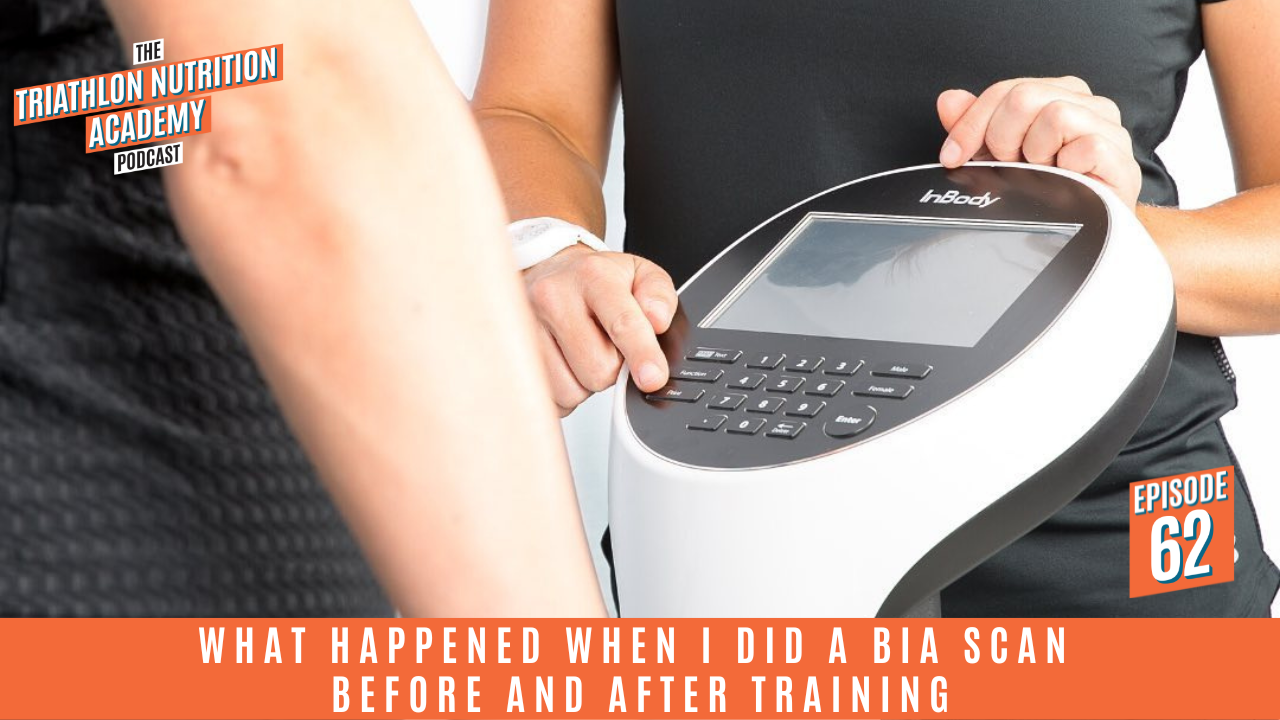
When it comes to body composition - so we're talking muscle mass, body fat, visceral fat, BMR and bone mineral content, there is absolutely no point in measuring something if it cannot accurately track progress. That's why Bioelectrical Impedance Analysis (BIA) scans are NOT the best tool.
When I was at the gym last week, I decided to do a spur of the moment experiment on myself - I did a BIA scan right before a gym session & again straight after.
Not planned – the machine just happened to be available – I thought it would be fun. And I knew it would highlight how easy it is to manipulate these types of scans.
So, a disclaimer – this was not a controlled experimental study by any means:
▪️ didn’t measure my sweat losses
▫️ didn’t empty my bladder before
▪️ was not fasted
▫️ glycogen levels – normal CHO stored in muscle
▪️ hydrated
Take a 🎧 listen to the latest podcast - Episode 62 and read the show notes for details on the experiment – what exercise I did and the before and after results. Let me just say, if I can gain 900g of body fat, lose 500g of muscle and gain almost a centimetre in my arm circumference in an hour - what hope do you have of a BIA scan assessing accurate change over 4 weeks?!
How BIA works:
▪️ Sends an electrical current through the body – to predict amount of bone/muscle/fat
▫️ Doesn’t measure directly – uses formulas to interpret the scan
▪️ Different types of tissue in our bodies having different levels of conductivity.
▫️ Lean body tissue, like bone and muscle, has a higher water and electrolyte content than fat mass. This means lean tissue has a greater conductivity, allowing the electrical current to pass through it easier.
▪️ The lower the reading of electrical impedance, the higher the lean body mass of the individual.
What makes a BIA scan unreliable?
▪️ Any condition that depletes your glycogen stores or dehydrates you will trick the machine into reading a higher fat mass. Glycogen depletion/dehydration = BIA higher body fat percentage
▫️ Depending on your training and dietary habits in the days leading up to the test, results can vary significantly - in fact a variance of up to 8% has been seen.
To put this into perspective, a scan on an individual who had reduced their body fat percentage by 4%, due to inaccuracy, could actually read an increase of 4% body fat. Not exactly a reliable measure…
If I was really bothered with my body composition, this scan would make me feel very disappointed about the whole process of eating well and training. But because I know how gray these numbers are, I'm okay.
If you haven't already, take a listen to my earlier podcast EP 32 – Stop wasting your money on BIA scans, for the full story and my recommendations on what to do instead.
LINKS
Episode 32 – Stop wasting your money on BIA scans - HERE and Episode 29 to learn about DEXA scans and skins fold testing - HERE
To dive deeper, listen to the Triathlon Nutrition Academy Podcast, EP 62 - What happened when I did a Bioelectrical Impedance Analysis (BIA) scan before and after training

If you are interested in learning more about the Triathlon Nutrition Academy Program and what it can do for you, head HERE to join the waitlist for our next opening in January.

Ready to fuel your training properly?
Start with the Triathlon Nutrition Kickstart Course.
The ULTIMATE
Triathlon Nutrition Checklist
Wondering how well you're nailing your nutrition to support triathlon training and racing?
Download my FREE 50 step checklist to triathlon nutrition mastery.
We hate SPAM. We will never sell your information, for any reason.
Author