n=1 The Power of Personalised Nutrition for Triathletes
Jan 02, 2026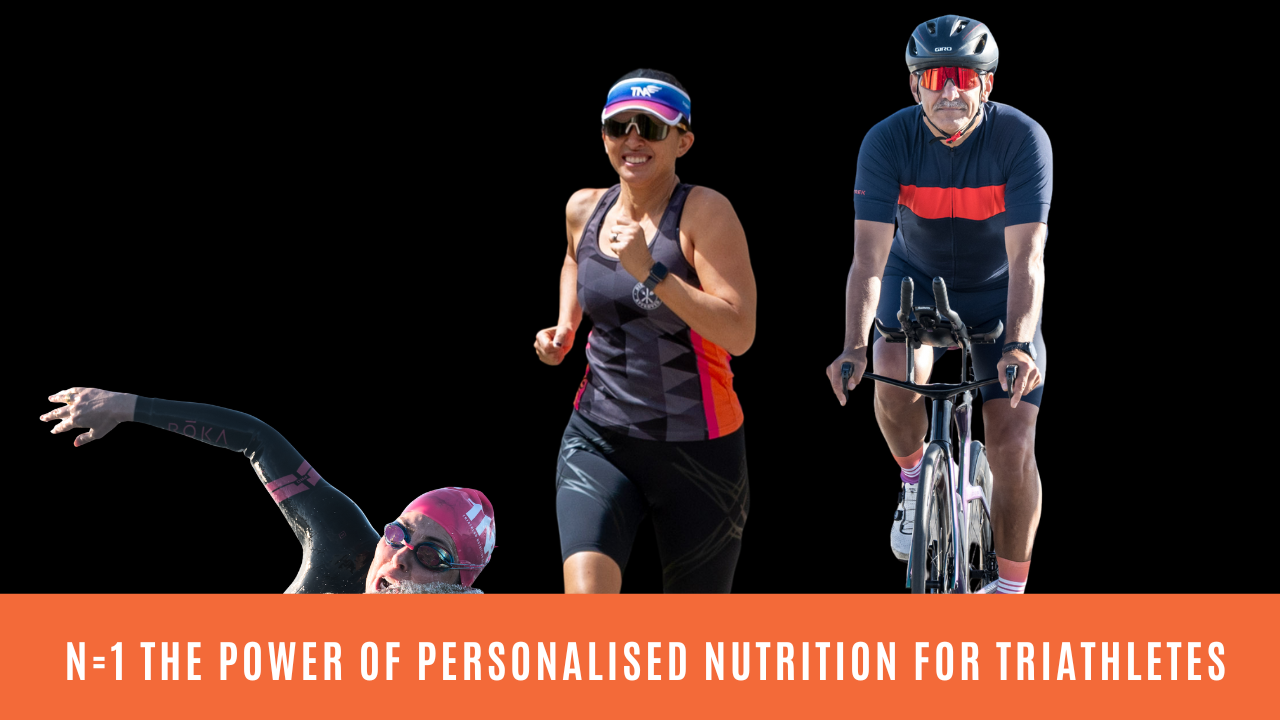
Triathletes, you train hard, invest in gear and follow structured programs, yet you might still be underperforming on race day. Why? Because you're relying on generic nutrition advice that doesn’t match your unique physiology.
This blog dives into the power of "N=1" – the scientific principle that you are your own experiment. Your sweat rate, carbohydrate tolerance, GI function and training load are completely different to your mate's. If you're still copying their fuelling plan or winging it on race day, it's time to stop.
What is N=1 and Why Does it Matter?
N=1 is research lingo for a study of one. In this case, you. Your:
-
Sweat sodium losses
-
Carb and fluid needs
-
Gut tolerance
-
Food preferences
-
Lifestyle and goals
...all shape what your ideal nutrition strategy should look like. Even if you're the same age, gender and race distance as someone else, their plan won’t necessarily work for you.
4 Key Areas to Personalise Your Nutrition Strategy
1. Hydration: Your Sweat Profile is Unique
Some athletes are salt guzzlers, others lose barely any. Your sodium loss could be 300 mg or 2000 mg per litre. Big difference.
The same goes for fluid needs. You might sweat buckets in a hot race, while others barely drip. A tailored hydration plan helps you avoid:
-
Cramping
-
Gut upset
-
DNF-ing and medical tent visits
Real athlete case: Chris, AKA "The Human Sprinkler", went from repeated DNFs to finishing strong after nailing his unique sodium and fluid strategy.
2. Fuelling: It's Not Just About Grams Per Hour
You’ve heard of gut training, but do you actually know what works for you? Fuel tolerance is highly individual. Some triathletes can handle 90+ grams of carbs per hour. Others cap out at 60.
Consider:
-
Do you prefer gels, chews or real food?
-
Can you eat on the move?
-
Do certain fuels make your gut rebel?
Gut training is about structured experimentation, not random race day testing.
3. Race Day Nutrition: Match Your Pace, Not Just Distance
A 70.3 done in 3.5 hours needs a totally different strategy than one done in 7. Your pace, intensity and duration dictate how much fuel and fluid you need.
Please stop defaulting to 90 grams of carbs per hour. Your body, your race plan.
4. Day-to-Day Nutrition: Fit It to Your Life
You can’t just copy a meal plan from the internet and expect results. Your daily nutrition must align with:
-
Your training schedule
-
Your preferences (vegetarian, allergies, etc.)
-
Your recovery needs
This is where the compounding effect happens. Nailing your everyday nutrition helps you adapt, absorb training and recover faster.
Why Generic Advice Fails
Advice from Facebook groups, tri clubs or that random guy at the expo might be:
-
Wrong for your body
-
Based on no science
-
Setting you up for cramping, GI issues or bonking
If your current strategy is a patchwork of random tips and mid-race experimentation, it’s no wonder things aren’t clicking.
Real Athlete Wins: Christine and Kathleen
Christine, a vegetarian and physician, joined the Triathlon Nutrition Academy knowing she needed evidence-based guidance tailored to her. Now, her plan fits her lifestyle, and she's racing without nutrition issues for the first time in years.
Kathleen thought gels were the problem. Turns out, it was the massive salad she ate the day before long runs. One tweak changed everything. That's the power of personalised support.
Stop Guessing. Start Performing.
You are not average. Your nutrition plan shouldn’t be either. If you want to:
-
Avoid gut bombs and dehydration
-
Train harder and recover faster
-
Show up to race day confident and fuelled
...then it’s time to go N=1.
Next Steps
Want to see how your current plan stacks up? Grab the Triathlon Nutrition Checklist to find your gaps.
Ready to ditch the guesswork? Register your interest in the Triathlon Nutrition Academy now and get ready to personalise your plan.
You’re N=1. Treat your nutrition that way.
Ready to fuel your training properly?
Start with the Triathlon Nutrition Kickstart Course.
The ULTIMATE
Triathlon Nutrition Checklist
Wondering how well you're nailing your nutrition to support triathlon training and racing?
Download my FREE 50 step checklist to triathlon nutrition mastery.
We hate SPAM. We will never sell your information, for any reason.
Author